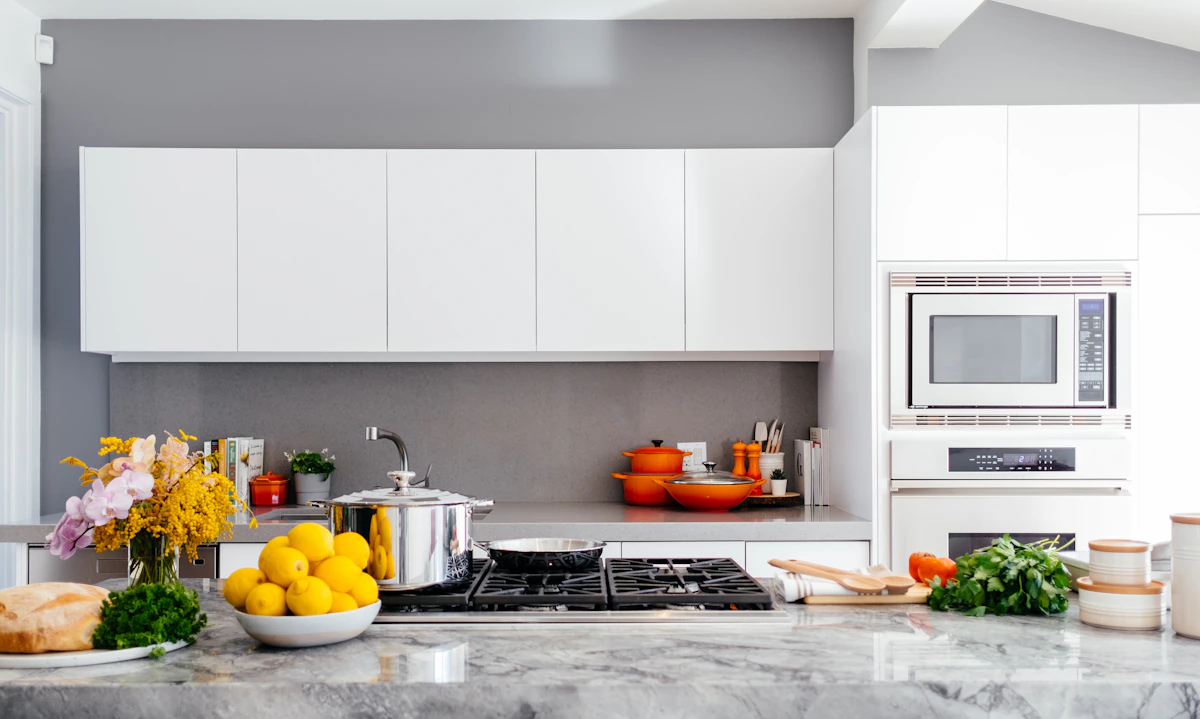
Kitchen clutter has a particular talent for accumulating. A few extra utensils become a drawerful; an occasional baking project leaves behind another pan; cookbooks gather until the shelves no longer make room for the books you actually reach for.
A Japanese-inspired tidying approach offers a useful change in perspective: rather than moving things from one room to another, gather similar items together, look at the whole category, and decide what supports the way you cook now.
Five categories for a calmer kitchen
The kitchen needs its own version of a decluttering plan. Grouping possessions by use makes the process concrete and keeps it from becoming an exhausting attempt to reorganize every cupboard at once.
1. Appliances
Place every countertop appliance together. Keep the machines you use and enjoy, along with those that perform a task you genuinely need. Duplicates, forgotten gadgets and equipment kept only for a hypothetical future can be passed along responsibly.
2. Pots and pans
Most meals rely on a small group of dependable cookware. Identify the pans that heat evenly, feel comfortable and suit your regular cooking. Retire worn or redundant pieces, and repair good cast iron rather than replacing it automatically.

3. Dishes and glassware
Serving pieces often multiply because they are acquired for imagined occasions. Keep the plates, bowls, mugs and glasses that suit everyday meals, and consider bringing special pieces into regular use rather than saving them indefinitely.
4. Knives and utensils
Start with the knife you reach for instinctively. Add a reliable paring knife and have both sharpened. Apply the same test to spatulas, spoons and whisks: if an item is uncomfortable, duplicated or untouched, it may not need to remain in the drawer.
A useful sorting question
Does this tool make cooking more capable, more enjoyable or more efficient? If the answer is no—and the item is not needed for a specific task—let it leave the kitchen.
5. Cookbooks
Cookbooks are not automatically clutter. Their value may be practical, sentimental or simply tactile. Keep the volumes you return to, want to read or would miss; release the books that no longer serve your cooking or curiosity. A smaller shelf can still hold a rich library.
The strategy: work in a clear order
Use boxes or bags to collect each category, but avoid making the containers a permanent second layer of storage. Work quickly enough to preserve momentum, and leave room to cook while the project is underway. A kitchen reset is more sustainable when it respects the everyday work the room needs to do.

Once the main categories are finished, smaller areas become easier to assess: spices, oils, dry goods and linens. Replace towels or oven mitts that are stained, burned or worn through. These modest changes often make the room feel newly functional.
The aim is not a perfect display. It is a kitchen with enough space and clarity for the cooking you actually do—a place where the best knife, favorite pan and most useful book are ready when you need them.