


Articles by Author

Bottled-at-the-source mineral water is delightfully refreshing, and with no calories or chemicals, is a drink that’s good for you and a base for many make-your-own sparkling beverages. It’s also ideal for cooking, with countless ways to improve basic recipes.
Vegetables

Add some sparkling water to make this cauliflower with orange marmalade glaze. Credit: Courtesy of “Shakespeare’s Kitchen”
For bright green broccoli and vividly orange carrots, cook them in sparkling mineral water. “Boil vegetables in sparkling water to preserve color and vitamins. Mineral water decreases oxidation and the loss of chlorophyll and carotenoid pigments, and keeps vegetable’s bright colors,” says Rino Mini, CEO of Galvanina natural spring water, renowned since ancient Roman times. “Sparkling mineral water also softens vegetables so you can reduce cooking time, better preserving the vegetable’s vitamins and nutrients. It lets you skip the step of plunging cooked vegetables in ice-cold water to retain their color.”
Tempura and fritters
More from Zester Daily:
» Cool summer drinks, with a dash of Indian flavor
» Cocktail hour: Garden-fresh flavors
Use sparkling water for better batter. Simply mix flour with sparkling water, dip your favorite vegetables, seafood or fish in the batter and then lightly fry. The sparkling water will make anything you fry extra crunchy.
Sparkling iced drinks
Instead of buying sodas, make your own. Sparkling water creates festive thirst-quenchers but without the added calories of bottled drinks. Combine sparkling water with lemon or other fruit juice for your own homemade natural fruit drinks. Add it to your favorite brewed tea or coffee for natural sparkling iced tea or coffee. “Use sparkling water in your coffee-brewing machine. Not only will it make chemical-free espresso or coffee but it has the delightful added advantage of keeping your machine from building unpleasant residue,” says Mini.
Cake, waffles, crepes and pancakes
Add sparkling mineral water instead of water or other liquids in cake recipes or cake mixes. The sparkling water makes it rise nicely and results in a fluffier texture. Great too with waffles: substitute one part of the milk for the water and follow the recipe as you normally would. Try it in your favorite crepe and pancake recipes. Replace half of the milk in the recipe for fizzy spring water for a improved texture. You’ll be thrilled with the delicious light and airy crunch.
Angel Food Cake
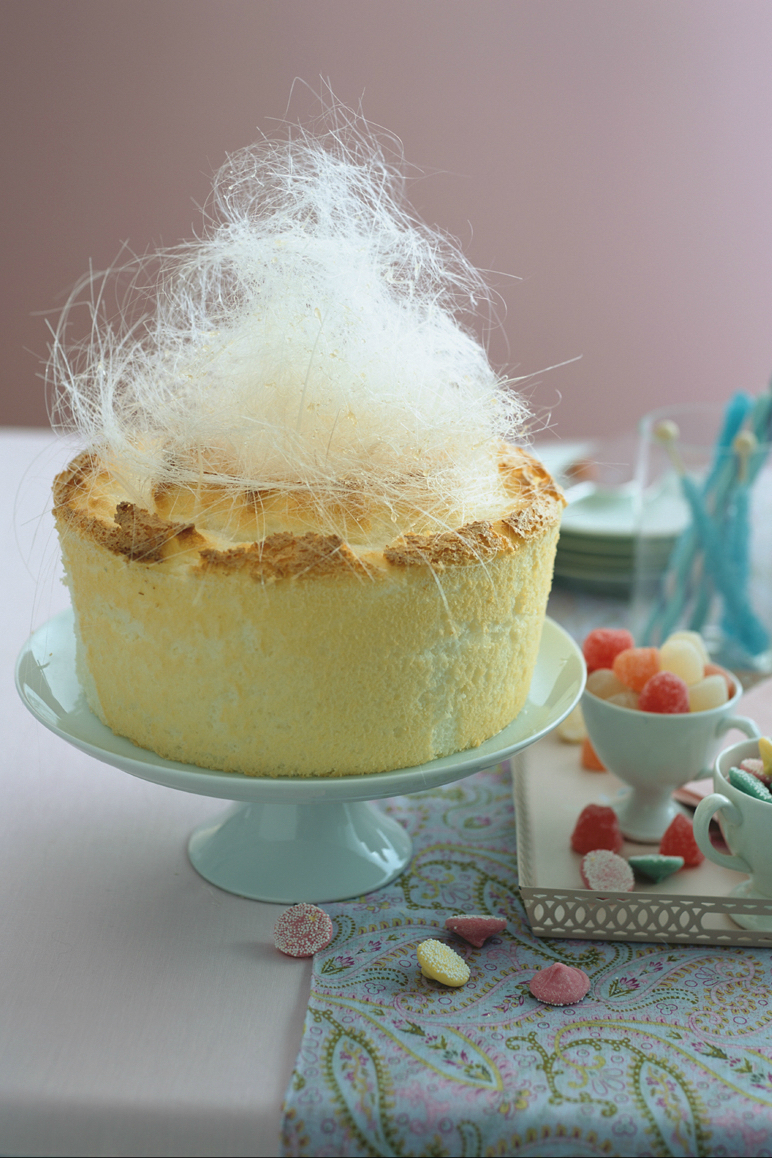
Add sparkling water to cake recipes for a fluffier texture. Credit: Courtesy of “Opera Lover’s Cookbook “
Recipe courtesy of Opera Lover’s Cookbook (Stewart, Tabori & Chang)
Prep time: 5 minutes
Baking time: 35 minutes
Total time: 40 minutes
Yield: 8 to 10 servings
Ingredients
12 large egg whites, room temperature
1/2 teaspoon salt
1/3 cup sparkling spring water, such as Galvanina
1 teaspoon vanilla or maple extract
2 teaspoons cream of tartar
1 cup cake flour
3/4 cup superfine sugar
Directions
1. Preheat the oven to 350 F. Generously butter and flour a Bundt or tube pan. Reserve.
2. In a large mixing bowl, using an electric mixer set on high, whip the egg whites, salt, water, extract and cream of tartar until the egg whites form soft peaks, about 5 minutes. Reduce the mixer speed to medium and slowly add the cake flour and sugar until just combined.
3. Pour the batter into the prepared Bundt pan and bake until golden, about 35 minutes.
4. Carefully invert the pan onto a wire rack and allow it to cool upside-down for about an hour, which prevents the cake from falling. Run a knife around the edges to remove the cake.
Main photo: Combine sparkling water with fruits to make your own natural fruit drinks. Credit: Courtesy of Galvanina

Fried street foods are popular in every region of Italy, where you’ll often hear: “Fried, even chair legs are delicious.” Neapolitans in particular have a cult-like devotion to fried fare, especially pizza fritta.
After World War II, the city found itself in crisis, and the materials needed for pizza — the mozzarella and even wood for the ovens — became a luxury. Fried pizza, a less-expensive alternative nicknamed “pizza of the people,” was filled with “poor” ingredients — pork crackling, pepper and ricotta. Housewives sold it on the streets to supplement the family’s income. Times were so hard, customers could even buy pizza fritta on credit: Called pizza-at-eight, pizza a otto, it was eaten on the spot but paid for eight days later.
Simple, homemade food

Gino Sorbillo fries pizza fritta at his Naples restaurant. Credit: Copyright 2016 Francine Segan
Naples-born Gino Sorbillo, Italy’s famed pizzaiuolo, made one for me recently explaining, “Pizza fritta comes in different shapes. Round, called montanare, or half moon calzone.” For the dough, which is the same as for classic oven pizza, Sorbillo uses only a minuscule pinch of leavening to create chewy, never spongy, dough. He stretches a round, fills it and pulls the ends into a whimsical mimicry of the clown Pulcinella’s hat. Sorbillo flash-fries at just the right temperature for a crisp, non-greasy outside and warm, gooey center.
“Pizza fritta is a simple food, easy to make at home because unlike classic pizza you don’t need a wood-burning stove, just a frying pan,” Sorbillo says. It’s very versatile and can be filled with virtually anything: a traditional ricotta, provolone and Neapolitan salami combo; mozzarella and ham; or sautéed broccoli rabe or other greens. And it is great plain or served with a side dipping of tomato sauce.
When you’re in Naples, be sure to have a classic wood oven-baked pizza at Gino’s famed restaurant on Via dei Tribunali. But if the lines are too long to get in, which they always are, enjoy a piping hot pizza fritta at his small fried pizza spot just a few doors down. If you can’t get to Naples, make Sorbillo’s fried pizza at home with the recipe below. Use his excellent dough recipe or use store-bought pizza dough.
Gino Sorbillo’s Pizza Fritta

If you can’t make it to Naples, you can make your own fried pizza at home. Note the tips folded in like a hat. Credit: Copyright 2016 Francine Segan
More from Zester Daily:
» Detroit-style pizza is the Motor City's latest export
» Lady's mouth pizza from Naples
Prep time: 20 minutes, plus 8 hours passive
Cooking time: 5 minutes
Total time: 25 minutes
Yield: 4 servings
Ingredients
A tiny pinch, 0.07 ounces, brewers yeast
2 cups, about 1 pound, organic “0” or pizza flour
3 teaspoons salt
Sunflower or other vegetable oil for frying
Sorbillo’s suggested fillings: sheep’s milk ricotta, thinly sliced ciccioli (Neapolitan pork salami), diced smoked provolone cheese, diced fresh peeled tomatoes, black pepper
Directions
1. Dissolve the yeast in 1 1/3 cups of warm water in a bowl, and then sift in the flour and salt. Knead on a floured work surface until smooth, 10 to 12 minutes. Divide the dough into 4 balls and let rise at room temperature, covered in a clean cloth, for about 8 hours.
2. Heat enough oil in a deep-sided skillet to cover one pizza at a time. Heat to 400 F.
3. Stretch each section into a flat circle, pressing down with your palm to flatten it. Put the ricotta, salami, provolone and a tablespoon of diced tomatoes in the center. Season with black pepper, fold over and pinch the edges closed, taking care to leave an air pocket in the center. Pull on the two ends a bit and slowly lower into the hot oil. Fry in the hot oil, about 1/2 minute per side, until golden. Drain on absorbent paper and repeat with the other three pizzas. Eat while warm.
Main photo: Gino Sorbillo, Italy’s famed pizzaiuolo, holds a finished pizza fritta. Credit: Copyright 2016 Francine Segan

Close your eyes. Take a deep breath of this golden elixir and you’re transported to the raucous spice bazaars of Marrakech. A classic Italian liqueur, popular in cocktails and as an after-dinner digestivo, Strega liqueur can be a cook’s secret weapon. It’s like having a well-stocked spice rack and fragrant herb garden in one bottle.
I’ve long loved Strega’s beguiling flavor in cocktails and as an after-dinner digestive. It appears in my book, “Dolci — Italy’s Sweets,” in several classic Italian desserts. But here’s a surprise: Strega is spectacular in savory dishes!
More from Zester Daily:
» Tips to create fresh liqueurs with a Tuscan spirit
» Maraschino liqueur fit for an emperor
Made with more than 70 aromatic spices and herbs infused into a base distillate, this 100% natural mixture — with no artificial colors or flavors — is aged in ash barrels to meld and mellow the flavors. The mix of exotic spices and herbs include the world’s three most expensive spices: saffron, which gives Strega its distinctive glistening yellow tint; vanilla; and cardamom.
Some of the ingredients come right from Italy: lavender, irises, orange and lemon peel, as well as amazingly aromatic juniper from the Italian Alps and rare wild mint from the south. The rest are gathered from around the world: myrrh from Ethiopia, star anise from China, cinnamon from Ceylon, bitter orange peel from the Caribbean island of Curaçao.
This aromatic mix of herbs and spices is masterfully combined in perfect proportion, creating an explosion of flavors and lending a gourmet touch to appetizers, pasta, chicken and fish, as well as countless desserts. Use it in recipes calling for wine or as a marinade for chicken or fish. It’s great on almost anything on the grill.
And, of course, Strega adds a refined touch to so many desserts: splash on fruit salad, add into pudding, cake mixes, pie crust and pie fillings. You probably have a bottle of Strega languishing in your liquor cabinet already — so move it into the pantry! Here are just a few of the many wonderful ways to enjoy it out of the glass.
Pasta Shish Kebob With Peaches and Scallops

Italy’s version of a shish kebob comes with pasta, scallops and sweet peaches. Credit: Photo courtesy of “Pasta Modern — New & Inspired Recipes from Italy” by Francine Segan (Stewart, Tabori & Chang)
Prep time: 5 minutes
Cooking time: 10 minutes
Total time: 15 minutes
Yield: 4 servings
From “Pasta Modern –New & Inspired Recipes from Italy” by Francine Segan (Stewart, Tabori & Chang)
Pasta, scallops, sweet peaches and red onion grilled on a stick — this is Italy’s delightful answer to shish kebob. A wonderfully new way to serve pasta.
Ingredients
8 short rosemary branches or wooden skewers
2 tablespoons olive oil
2 tablespoons Strega liqueur
1 garlic clove, finely minced
8 large scallops
1 peach, cut into 8 slices
1/2 small red onion, cut into bite-sized pieces
Fresh or dried chili pepper, to taste
16 wheel–shaped “route” pasta
Salt
Directions
1. Soak the branches or skewers in water for 1 hour to prevent charring.
2. Preheat the broiler or grill. (If using the broiler, coat a baking sheet with a little olive oil.)
3. In a bowl, combine the oil, Strega liqueur, garlic, scallops, peach, onion and chili pepper.
4. Meanwhile, cook the pasta in boiling salted water until al dente. Drain and toss into the bowl with the other ingredients. Thread a pasta wheel, peach slice, scallop, onion piece, and a second pasta wheel onto each branch or skewer. Season the skewers with salt and grill or broil, turning 1/2 turn every minute or so, until the scallops are done, about 3 minutes.
Chicken With Artichokes

A chicken and artichoke dish is enhanced with a little bit of Strega. Credit: “Shakespeare’s Kitchen” by Francine Segan (Random House)
From “Shakespeare’s Kitchen” by Francine Segan (Random House)
Prep time: 5 minutes
Cooking time: 45 minutes
Total time: 50 minutes
Yield: 6 servings
Ingredients
3 tablespoons olive oil
1 chicken, cut into 8 pieces (about 4 pounds)
1/2 cup all-purpose flour
1/2 cup chicken stock
1/4 cup Strega liqueur
1 lemon, unpeeled, diced
6 dates, chopped
1 tablespoon brown sugar
1 teaspoon salt
5 to 6 artichoke bottoms, cleaned, par-boiled
Directions
1. Heat the oil in a large sauté pan over medium-high heat.
2. Dredge the chicken pieces in the flour and brown the chicken on all sides.
3. Remove the chicken from the pan and add the stock, Strega liqueur, lemon, dates, brown sugar and salt. Bring to a boil and then add the chicken and artichokes.
4. Reduce to medium heat, cover, and simmer for 30 minutes.
5. Turn over the chicken, and cook for 15 minutes, or until the chicken is fork tender.
Main photo: A mix of exotic spices and herbs gives Strega its distinctive tint and flavor. Credit: Copyright 2016 Francine Segan

Perhaps one of the most bizarre Easter traditions in Italy is a cheese-tossing contest called ruzzolone, which is popular in central Italy. A fun place to witness this sort of edible discus event is in the Umbrian hill town of Panicale, near Perugia.
A huge 10-pound wheel of hard aged pecorino cheese is hurled along a course in the center of town. Two teams, with four players each, compete to get the cheese around the course using the fewest number of throws. The players wrap a long cloth sling with a wooden handle around the cheese to help hurl it down the curving streets, across moats, and around spectators and vehicles. The winning team gets to keep the cheese. If the cheese breaks during the race, everyone shares it.
An ancient Italian tradition

A man takes part in last year’s cheese-tossing competition in Panicale. Credit: Copyright 2016 Francine Segan
The origins of this unusual contest are uncertain, but frescos have been found dating to Etruscan times that depict smiling shepherds rolling rounds of cheese down slopes, seemingly just for the fun of it.
More from Zester Daily:
» A treasured 'Cheese Sunday' recipe to greet Easter
» Easter Egg cheese a holiday tradition
The game was well established by the Middle Ages, and over the years various laws were set in place: In 1598 a mayor from an Emilia-Romagna town placed betting limits to the current restriction of wagering no more than the value of the cheese being tossed, and in 1761, in response to complaints of the rowdiness of the game, a governor of that region limited the game to the period between Carnival and Easter.
Nowadays it’s back to a year-round game, as gradually over time, many towns replaced the cheese with a solid wooden wheel, allowing play even in summer, when the heat would have made the cheese too soft to toss.
If you visit Panicale on Easter Monday to witness this lively sport, be sure to stay until a winner is declared. You can then enjoy a free picnic lunch of local cheese and bread sandwiches offered in the town square. For dessert, enjoy pieces of chocolate from the gigantic 4-foot Easter egg that decorates the piazza.
Easter Pasta Pie

A homey and comforting pasta pie comes together without much fuss. Credit: Courtesy of “Pasta Modern: New & Inspired Recipes of Italy” (Stewart, Tabori & Chang), by Francine Segan
To create your own Easter Monday cheesy celebration, make pasta pie (crostata di tagliolini), a lovely make-ahead picnic dish traditionally eaten in Italy on Pasquetta, “Little Easter,” the day after Easter. Thin egg noodles are layered with cheese, ham and mushrooms with tiny peas scattered between the layers to add a green burst of flavor. It’s baked in the oven until beautifully golden, sliced like pie, and eaten at room temperature.
From: “Pasta Modern: New & Inspired Recipes of Italy” (Stewart, Tabori & Chang), by Francine Segan
Prep time: 30 minutes
Bake time: 25 minutes
Total time: 55 minutes
Yield: 8 servings
Ingredients
Olive oil
1 small onion, minced
2 ounces pancetta or prosciutto, minced
8 ounces baby peas
Salt and black pepper
3/4 pound mushrooms, thinly sliced
1 clove garlic, minced
7 tablespoons butter, plus more for the pan
About 1/4 cup toasted bread crumbs
1 cup chicken or beef stock
1 pound tagliolini, thin egg noodles, preferably Felicetti brand
4 tablespoons all-purpose flour
2 cups milk, warmed
About 1/2 cup grated Parmesan cheese
3/4 pound burrata or mozzarella cheese, diced
8 ounces thinly sliced ham, cut into strips
Directions
1. Heat 1 tablespoon of oil in a small frying pan over medium high heat. Cook the onion and pancetta until softened, about 5 minutes. Add the peas and a few tablespoons of water, and cook until the peas are tender, about 5 minutes. Season with salt and pepper, set aside in a bowl.
2. In the same pan, heat 2 tablespoons of oil over high heat. Cook the mushrooms and garlic a minute or two, until tender. Season with salt and pepper, set aside.
3. Preheat the oven to 350 F. Butter an 8- to 9-inch nonstick spring-form pan and dust with bread crumbs.
4. In a small pot, simmer the stock until reduced by half.
5. In another small pot, make the béchamel. Melt 4 tablespoons of butter over medium heat, stir in the flour and cook, stirring constantly with a wooden spoon, until smooth. Add the warm milk, and bring to a boil, stirring until thick, about 2 minutes. Season with salt and pepper. Set aside.
6. Cook the pasta in salted, boiling water 3 minutes less than package directions. Drain and toss with the reduced stock.
7. Layer the bottom of the prepared baking pan with 1/3 of the pasta, pressed into a level layer. Dot with 1/3 of the béchamel, sprinkle with 2 to 3 heaping tablespoons of grated Parmesan, scatter on all the pea mixture, then scatter over 1/3 of the diced cheese. Spread out a second level layer of pasta, dot with 1/3 of the béchamel, sprinkle with 2 to 3 heaping tablespoons of Parmesan, and scatter on all the mushrooms and ham and remaining 2/3 of the diced cheese. Top with the remaining pasta and any unabsorbed remaining stock, pressing down to compact the layers. Dot with the remaining béchamel, sprinkle with 2 to 3 tablespoons of Parmesan and 2 to 3 tablespoons of bread crumbs, and dot with 2 to 3 tablespoons of very thinly sliced butter.
8. Bake for about 25 minutes until set and golden. Let rest to room temperature before slicing.
Main photo: A contestant prepares a cheese wheel for Panicale’s Easter Monday competition. Credit: Copyright 2016 Francine Segan

Each year on Easter Monday, residents of Fanano, a picturesque hill town in the Emilia-Romagna region of Italy, arm themselves with hard-boiled eggs to do battle in the village square. Young and old alike participate in this centuries-old tradition that started in the sixth century as a way for townsfolk of all social levels, nobility and commoners, rich and poor, to compete on a level battlefield for a day.
Eggs have long been a symbol of Easter and even back in pagan times were associated with new life and springtime. Eggs were especially highly valued as food in medieval times, so winning an egg was considered quite a prize, with the poorer folks hoping their winnings might feed the family for several days.
Cracking Contests

Brightly colored Easter eggs are distributed to townspeople in Italy. Credit: Copyright 2016 Francine Segan
Young and old alike today compete in this ancient “Cracking Contest” — Coccin Cocetto. How do you play? Each participant puts an egg onto a long wooden board and gathers round. A designated person randomly selects eggs from the row and distributes them to the first two contestants, who square off and bang their eggs together. The person whose egg cracks first loses. The winner takes possession of the broken egg, and then battles the next opponent. One contestant must hold his egg still, while the other hits it. Who gets to hit is determined either by a coin flip or by shooting odds or evens.
“It isn’t about luck,” explained Massimo, a dapper resident who has been playing, and often winning, for over 60 years. “You can win if you are the one holding still or hitting. Each has a technique.” He then went on to beat this author six times in a row, alternating between being the hitter and the hit-ee!
Most locals bring their own hard-boiled eggs to the event, but the town graciously provides colorful eggs free of charge for anyone who didn’t bring their own.
More from Zester Daily:
» Pasta moves from meals to finger foods
» From Umbria, a simple wood-fired flatbread
While in Fanano, you can continue the medieval theme with a visit to the town’s lovely 11th-century Montefiorino Fortress and exquisite ninth-century Romanesque church. There are also lovely trails for hiking and biking nearby. After you’ve worked up an appetite, be sure to stay for lunch or dinner.
Like all food in Emilia-Romagna, the local fare is indescribably delicious. Traditional dishes include crescentine, the area’s famed flat bread; gnocco fritto, fried squares of dough; and rosette, rolls of fresh pasta filled with cheese and topped with meat sauce.
The day after Easter, called Pasquetta or Il Lunedi dell’Angelo, “Angel’s Monday,” is a day off throughout Italy, and Italians traditionally go on picnics. Typical picnic foods include raw fava beans eaten with pecorino cheese and casatello, savory bread filled with proscuitto and cheese topped with hard-boiled eggs still in their shells. Celebrate spring with basotti, a traditional Emilia-Romagna dish made with egg noodles
Basotti (Crunchy-Tender Pasta Squares)

An easy-to-assemble Basotti recipe is made with egg pasta. Credit: Courtesy of “Pasta Modern: New & Inspired Recipes of Italy” (Stewart, Tabori & Chang), by Francine Segan
Courtesy of “Pasta Modern: New & Inspired Recipes of Italy” (Stewart, Tabori & Chang), by Francine Segan
This recipe is simple to assemble, but must be made with egg pasta, either fresh or dried. You’ll only need 1/2 pound of pasta, as egg pasta expands as it bakes and absorbs the cheese and broth. Speaking of broth, since it provides most of the flavor, it’s best to use homemade.
Prep time: 5 minutes
Bake time: 40 minutes
Total time: 45 minutes
Yield: 4 servings
Ingredients
10 tablespoons butter
2 tablespoons finely ground bread crumbs
1/2 pound egg tagliolini or another very thin egg noodle
About 2 cups grated Grana Padano or other aged cheese
Nutmeg
4 cups rich pork, beef or chicken broth, preferably homemade
Directions
1. Preheat oven to 400 F. Generously butter an 8 x 15-inch metal baking pan and sprinkle with bread crumbs.
2. Put half of the uncooked pasta in the pan and top with 5 tablespoons of very thinly sliced butter, 3/4 cup of the grated cheese and 1 tablespoon freshly grated nutmeg. Add the remaining pasta, in a thin scattered layer, on top. Top with another 5 tablespoons of very thinly sliced butter and more nutmeg.
3. Bring the stock to a boil. Ladle over the pasta until just covered. Sprinkle with 3/4 cup grated cheese. Bake for 35 to 40 minutes, until firm to the touch.
4. Raise the oven to 475 F.
5. Top pasta with 1/2 cup grated cheese, and bake for a few minutes until crispy on top.
Main photo: Contestants battle with eggs last Easter Monday in the town of Fanano, Italy. Credit: Copyright 2016 Francine Segan

For simple holiday entertaining, take a cue from Italy and select a few quality ingredients that are wonderful alone, but that can dress up for any party. Three Italian classics — Grana Padano aged cheese, Prosciutto di San Daniele and Mortadella Bologna — can create dozens of delectable nibbles.
Following is a look at some of the possibilities.
Entertaining gluten-free

Wrap a slice of succulent prosciutto around veggies for elegant Italian umami “sushi.” Credit: Courtesy of Mortadella Bologna IGP
Thinly slice prosciutto or Mortadella Bologna and serve on a pretty wooden board. Set out wedges of Grana Padano with a cheese knife and clusters of grapes for simple, elegant party nibbles.
Wrap a slice of succulent prosciutto around veggies for Italian umami “sushi.” Try zucchini, carrots, enoki mushrooms, cucumber and avocado, which all pair wonderfully with prosciutto. Mortadella Bologna also makes a great roll-up. Sprinkle with chopped pistachios for color and crunch.
Fruit pair perfectly with cold cuts and cheese. Melon is a classic with prosciutto, so for a festive variation, dice cubes to create mini bites. Cantaloupe and honeydew melons make a pretty color mix.
Figs and fruits

Figs pair perfectly with cold cuts and cheese. Credit: Courtesy of “Philosopher’s Kitchen,” Random House
Figs too are a classic pairing, but fresh figs aren’t readily available during the holidays, so use dried instead. Simmer a dozen dried figs in a cup of white wine to make them soft and summer sweet.
More from Zester Daily:
» Pasta moves from meals to finger foods
» How to throw a flawless holiday party
Guests love a little skewer to nibble with a glass of bubbly Prosecco Superiore. Try Prosciutto di San Daniele and Grana Padano served with fried sage leaves and cubes of Mortadella Bologna accompanied by pistachio cream, made by blending finely ground pistachios with a little heavy cream and mascarpone or cream cheese. Fresh fruit like pears, apples and grapes pair perfectly with the naturally creamy sweetness of Grana Padano. It’s also wonderful with dried fruit. Spear chunks with olives and dried cranberries for a tangy-savory combo.
A toast to the party

Melt Grana Padano cheese with prosciutto or mortadella for bruschetta toppings. Credit: Courtesy of Grama Padano DOP
Grana Padano lends itself to all sorts of bruschetta toppings. Melt onto bread to accompany Prosciutto di San Daniele or Mortadella Bologna, or for a vegetarian option top with chopped fresh or sun dried tomatoes or red bell peppers.
Mini sandwiches are always a party favorite. For an Italian riff — called “panettone gastronomico” — horizontally cut tall brioche bread into 7 equal slices to create 3 sandwich layers. Use your favorite filling, then stack and slice into triangles. The top section sits above as a decorative garnish.
Little baked pasta cups make a versatile appetizer. Just a quarter pound of pasta makes 24 bite-sized treats that can be eaten plain or topped. To make, combine cooked angel hair pasta with a beaten egg and some grated aged cheese. Twirl on a fork and bake into mini muffin tins until firm and golden at the edges. Then serve plain or topped with Prosciutto di San Daniele, Mortadella Bologna, shaved Grana Padano or pesto.
Everything Cheese Crisps

These cheese crisps are perfect to serve with cocktails, for garnishing soup or salad, or just as an afternoon snack. Credit: Copyright 2011 Quentin Bacon
The usual bag of chips is OK for everyday, but dazzle party guests with these creative cheese crisps by cookbook author and PBS TV host Ellie Krieger who notes, “These easy, cheesy nibbles are a gigantic punch of Grana Padano flavor in a light lacy crisp. I brought in an extra touch of fun by flavoring them with all of the seasonings of my favorite “everything” bagel.”
Adapted from Comfort Food Fix, © 2011 by Ellie Krieger. Reproduced by permission of Houghton Mifflin Harcourt. All rights reserved.
Prep time: 10 minutes
Bake time: 8 minutes
Total time: 18 minutes
Yield: 8 servings
Ingredients
2/3 cup finely grated Grana Padano cheese (2 ounces)
1 teaspoon all-purpose flour
2 teaspoons sesame seeds
1 teaspoon poppy seeds
1 teaspoon dried minced onion
1/2 teaspoon garlic powder
Directions
Preheat the oven to 350 F. Line a baking sheet with parchment paper. In a small bowl, combine the cheese, flour, seeds, onion, and garlic powder. Spoon heaping teaspoons of the mixture onto the prepared baking sheet, leaving 2 inches between each mound. Using your fingers, pat the mounds down, spreading them so each is about 2 1/2 inches in diameter. Bake until they are golden brown, about 8 minutes. Allow to cool completely on the baking sheet before lifting them off carefully. Make the crisps up to 2 days ahead and store in an airtight container at room temperature.
Main photo: Try serving a “panettone gastronomico,” a sandwich tower, at your next party. Credit: Copyright Rovia Signorelli, Alessandria Italy