
Ilana Sharlin Stone
From:
Cape Town, South Africa
Articles by Author

Back in 2000, Los Angeles native Samantha O’Keefe took a major chance on a winemaking career and an untested wine region when she purchased a farm in South Africa’s Overberg. Today, her Lismore Estate Vineyards wines consistently achieve 90+ ratings from Robert Parker and other industry heavyweights, and she’s considered a pioneer of a region that is making world-class wine. “It’s been an overnight success after 14 years of slogging away,” she says with dry humor.
It all started 16 years ago, when O’Keefe, whose career was in TV development, and her then-husband decided to travel in South Africa. They ended up planting roots in Cape Town, where they looked for a business they could develop. One rainy Sunday with their 5-month-old baby, they drove out to a farm on the outskirts of Greyton, a small town at the base of the Riviersonderend mountain range. As they stood at the bottom of the property and looked up at its dramatic slopes, her husband said: “We could make wine here.”
Pioneers in the region
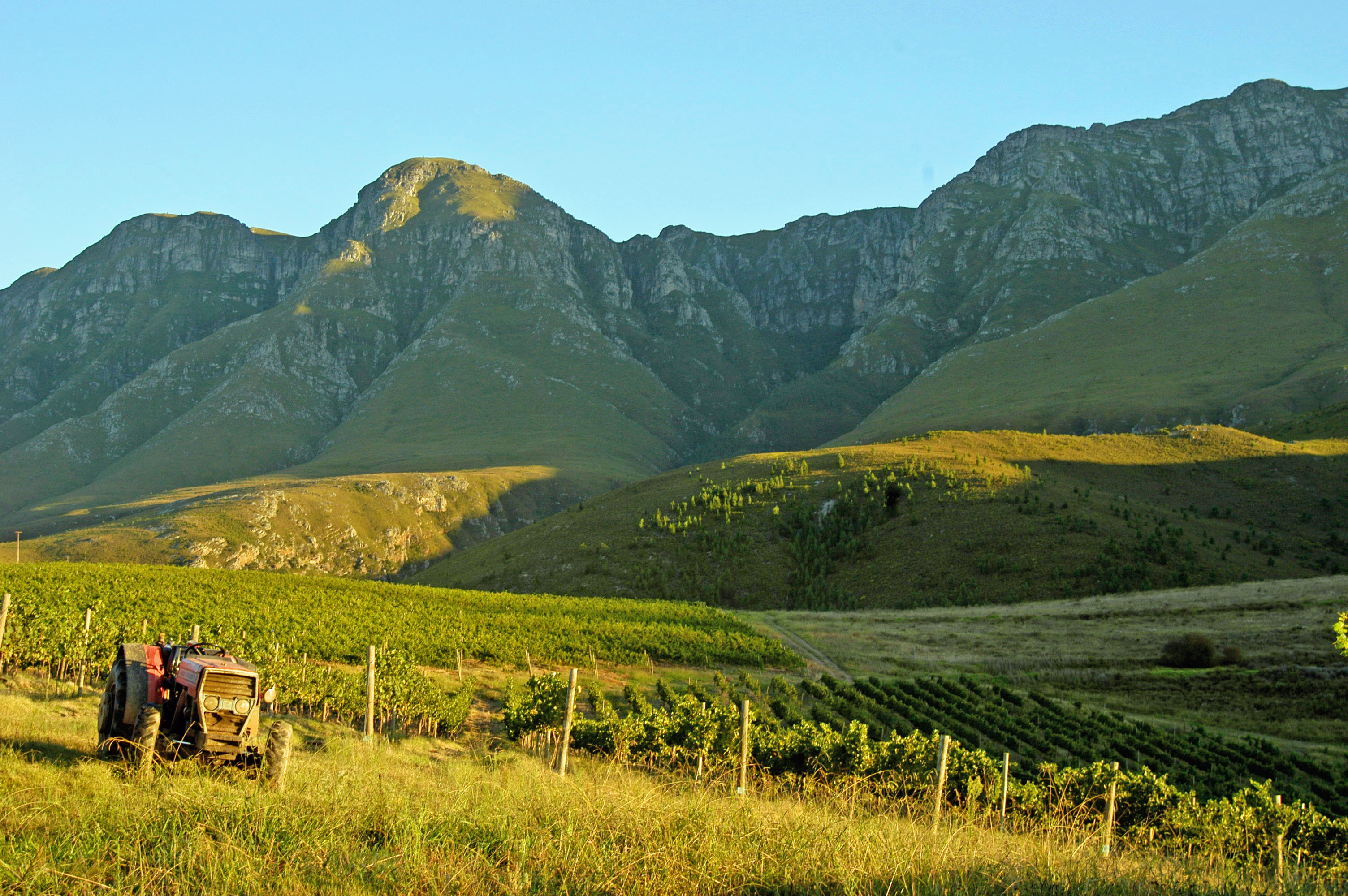
Lismore Estate Vineyards sits on the outskirts of Greyton, at the base of the Riviersonderend mountain range. Credit: Courtesy of Lismore Estate Vineyards
Neither had made wine before and there were no vineyards on the farm, or within 40 miles of Greyton. Four days later, they made an offer on Lismore farm.
Crazy? “It was a vision,” says O’Keefe. The deal was contingent on the results of an extensive viticulturist report, which came back showing favorable cool climate terroir with shale soils. “The research showed that the terroir was similar to that of the Northern Rhone. At the time, everybody was pushing cool climate planting, but Greyton was overlooked, maybe because there was nothing out here.”
More from Zester Daily:
» This is the moment for new South African wines
» Nelson Mandela’s legacy in a bottle
The couple spoke to a few local winemakers, including Peter Finlayson, the highly respected first winemaker in nearby Hemel-En-Aarde Valley. “Peter said that if we succeeded, we’d be pioneers. If we failed, no one would care. When all was said and done, we made an educated guess that it could be very special.” By 2004, they had planted 36,000 vines: Chardonnay, Sauvignon Blanc and Northern Rhone varietals Syrah and Viognier, the two that are Lismore’s most critically acclaimed today and “taste like nothing else coming out of South Africa,” she says.
They then set about building their dream house, “a cross between Cape vernacular and California ranch,” high up on the 740-acre property, and they had a second child. There were many initial shocks, including a house that was way over budget, but this was nothing compared to what happened on the eve of Lismore’s first harvest in 2008, when O’Keefe’s husband unexpectedly left. “It was a shock, but the next day I had to get up and start making wine.” A few months later, the global financial crisis hit, and things got even tougher.
“I had borrowed millions of rands that I needed to pay back, when suddenly the world ground to a complete standstill. I was desperate and tried to sell the farm but couldn’t. Finally I was able to sell 20 percent of the property, which enabled me to pay off my debt.”
Gaining notice
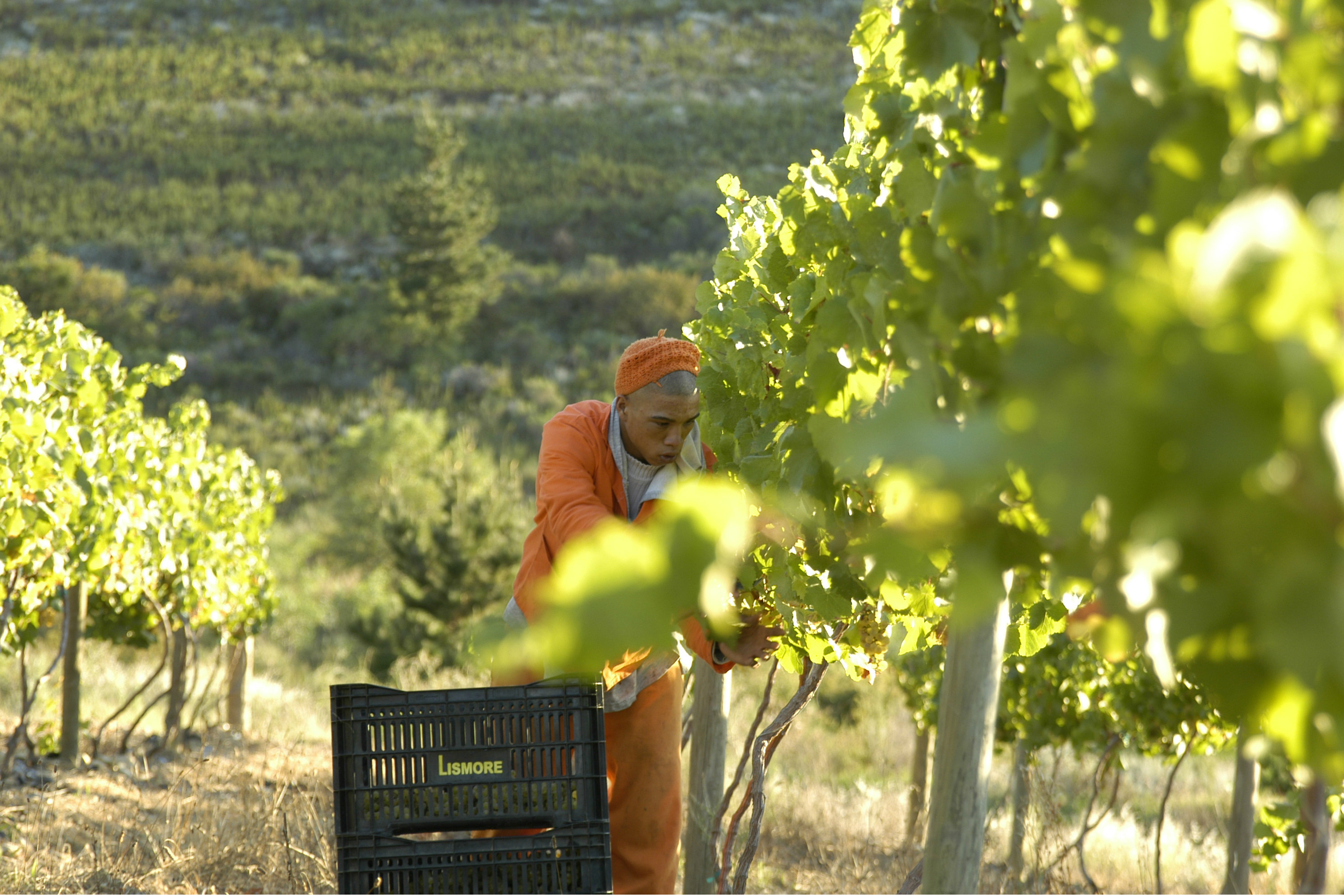
A worker at Lismore Estates, which consistently achieves 90+ ratings from Robert Parker and other industry heavyweights. Credit: Courtesy of Lismore Estate Vineyards
In 2012, friends pooled funds to buy O’Keefe a ticket to London, so that she could participate in the Beautiful South, a show featuring wines from South Africa, Argentina and Chile. At the show, she stood across from Neal Martin, who she didn’t know was a Robert Parker reviewer. After tasting her wine, Martin said: “I hope you have distribution, because when people read my report they’ll be banging down your door.” He gave her Chardonnay and Viognier 92 points. That’s when things started to change, for the better.
Today, she is most proud of her Barrel Fermented Sauvignon Blanc, “a wine that is outside of the box by South African standards, more winemaker-driven than my others, and more style than terroir.” The list of Lismore accolades is long, with her 2014 Syrah on the Robert Parker Wine Advocate Best 50 List of 2015 and the 2013 Lismore Viognier named one of Tim Atkin’s Wines of the Year. More than half her wines are exported to the United States and Europe.
The fact that a virgin winemaker could make such a success is as captivating as her wines. O’Keefe is proud, but also grounded. “Winemaking is not rocket science. It’s chemistry, which I’ve always loved, as well as schlep. I also had the best minds in the area on speed dial.”
There are still no other commercial producers in Greyton, but O’Keefe thinks it’s only a matter of time before she has winemaking neighbors. “South Africa is a really exciting place to be in the wine industry today,” she says. “Small producers have the freedom to experiment and push boundaries, and we are benchmarking wines against the best of the world for the first time.”
The Lismore Estate wines can be bought at timelesswines.com.
Main photo: Samantha O’Keefe went from being a newcomer to winemaking to now having highly touted wine. Credit: Courtesy of Lismore Estate Vineyards

If you’re a globetrotter into fine dining, consider making your next destination Cape Town and its outlying Winelands, where an innovative eight-course tasting menu paired with wines will cost you about $60 to $80 for lunch, and $85 to $105 for dinner. Thanks to the dollar’s strength in South Africa, Americans are in for a feast of value in this scenic foodie haven, ripe with culinary talent and internationally acclaimed restaurants.
As for the tasting menus, you can expect the unexpected. You might find poached oysters with lemon, seaweed and apple at La Colombe; Cape Wagyu tongue with gnocchi, celery, carrots and celeriac at Overture; or light curry glazed kingklip (a local fish) at The Test Kitchen, cooked slowly at the table over curry leaves in concrete charcoal-filled bowls, and served with carrot cashew purée and carrot beurre noisette.
Joining the gastronomic scene

La Colombe, ranked in the World’s 50 Best Restaurants, uses local ingredients. Credit: Copyright 2016 Micky Hoyle
During the apartheid years, South Africa was shunned and largely cut off from the world, even in a culinary sense. But since Mandela’s presidency, it’s seen an influx of foreign chefs and cuisines. Many South African chefs have also worked in Europe and Asia, and returned all the better for it.
Today, Cape Town is a known pit stop on the gastronomic world map. The Test Kitchen, La Colombe and The Tasting Room have ranked in the World’s 50 Best Restaurants, in various categories. Cape Town’s status as a world-class design city has also helped — it was World Design Capital in 2014 — with local talent behind great-looking dining spaces.
Fueling the scene is a flush of small growers and producers, offering chefs great produce, ethically raised meats, wild game, seafood and indigenous ingredients like sour figs, baobab, buchu and honeybush tea, along with a flurry of artisanal products.
“Overall, our fine dining feel is quite natural and organic when compared to other countries, with less rigid styling and a trend towards local ingredients and preparations, giving it a sense of place,” says Scot Kirton, head chef at La Colombe.
Local ingredients paired with wine

The Test Kitchen’s pan-seared linefish with potato and snoek medley, black forest ham and fish jus-roasted potato skin. Credit: Copyright 2016 Justin Patrick
More from Zester Daily:
» This is the moment for new South African wines
“South Africa doesn’t have a strong food heritage like the French, which means that our cuisine can be eclectic, with lots of people doing different things,” adds Luke Dale-Roberts, the British-born chef/owner of The Test Kitchen, located in the city’s revitalized Old Biscuit Mill warehouse complex. Foreigners also appreciate what Kirton calls “the South African knack for hospitality, in which even in the top tiers of fine dining, guests feel greatly cared for on a personal level.”
While the feeling is relaxed, with lunchtime guests sometimes even wearing shorts, few of these high-end restaurants are taking walk-ins. The Test Kitchen, ranked 28th in the World’s 50 Best Restaurants in 2015, is currently taking dinner reservations six months in advance, although in August it will switch over to an online 30-day-in-advance booking system.
Wine is intrinsically part of local dining, with the closest vineyards 20 minutes from central Cape Town. While South Africa has a 350-year-old wine heritage, quality has improved dramatically in recent years, and there is a new posse of young and adventurous winemakers. This means great synergy and camaraderie between winemakers and chefs, who are sometimes even on the same property. Many of the Cape’s best restaurants are on wine estates, which doesn’t necessarily mean they only serve that estate’s wine; most have extensive wine lists, with excellent wines for as little as $15 a bottle.
Simple, seasonal and South African

The Tasting Room’s Joostenberg vlakte duck, with boerenkinders purée. Credit: Courtesy of Le Quartier Francais
Despite global influences, many of the best chefs are expressing their personal experience of South Africa. Bertus Basson of Overture Restaurant, on a Stellenbosch wine estate, describes his food as “simple, fresh, seasonal and South African,” and creates dishes like West Coast Memories, with salmon, octopus, sout-vis (salted fish) and snoek.
In the idyllic Winelands village of Franschhoek, Dutch-born Margot Janse has been the chef at The Tasting Room at boutique hotel Le Quartier Francais for 20 years, and has set the local bar for ultra-creative tasting menus. Her food “celebrates South and Southern Africa through their ingredients and stories.”
Take her Joostenberg vlakte duck dish, for example, which she says “carries many stories.” The duck is farmed in an area where many Dutch settlers grew grapes and produced brandy. Janse steeps mixed fruit in brandy, like it’s done in Holland, but adds buchu — “one of our magical indigenous herbs.” After six weeks, it’s mixed with celeriac in a purée. The duck is baked in a salt crust made of hand-harvested Baleni salt mixed with kapokbos, another indigenous herb. The breast is served with the purée and crispy bits of neck and leg, and a grape jus. “It’s about the duck and its heritage,” she says. One dish of many in a new dynamic dining region.
Note: Prices are based on current exchange rates as of May 2016, of 15 South African rand to 1 U.S. dollar. Fluctuations may occur.
Main photo: The Test Kitchen’s blinissoise, with chilled blini creme, barbecued langoustine “en gele,” and a langoustine tataki with liquorice powder. Credit: Copyright 2016 Justin Patrick

South Africa’s Pickled Fish: A Sweet And Sour Easter Treat
by: Ilana Sharlin Stone
in: Holidays w/recipe
In Cape Town, South Africa, Easter is all about chocolate eggs, hot cross buns and pickled fish, a local turmeric-hued, sweet and sour favorite, flavored with spices from the Cape of Good Hope’s Malay culinary heritage.
Although pickled fish is closely associated with Easter, the sweet and sour curried dish has little to do with the Christian holiday. Naturally preserved with vinegar, it’s a make-ahead dish that can span South Africa’s four-day Easter weekend, when no matter what your religion is, socializing and relaxing still reign supreme.
In South Africa, pickled fish is most closely linked with the Cape, where it’s on hand in many households as casual food for drop-in visitors and picnicking. Its spicy roots lie in the Cape’s Muslim population, whose ancestors were brought by the Dutch as slaves from the East Indies: from India, Indonesia and Malaya. As author and Cape Malay caterer Cass Abrahams says: “The slaves knew all about spices; and fish is also a big part of Cape culture.”
An Easter staple

A much-loved national dish that is available even in upmarket supermarkets, pickled fish is generally homemade. Credit: Copyright 2016 Ilana Sharlin Stone
In cuisines across the globe, pickling fish was a common and necessary practice before the advent of refrigeration, and each preparation reflected its cuisine’s unique set of ingredients. There are differing opinions about its South African genesis. The earliest written reference that cookbook author Jane-Ann Hobbs has seen comes from Lady Anne Barnard, the Cape’s “First Lady” in the late 1700s, who after visiting a local farm in 1798 wrote that she was served “fish of the nature of cod, pickled with Turmarick.”
While today it’s a much-loved national dish that is available even in upmarket supermarkets, pickled fish is generally homemade and an Easter staple, both for Muslims and Christians. Easter falls at a time of year when fish is both readily available and in great demand, with many Catholics eschewing meat during Lent.
The golden color of curried pickled fish is everywhere at the 150-year-strong Easter weekend gathering at Faure outside the city, where the annual Sheik Yusuf Kramat Festival takes place. Hundreds converge for the long weekend to camp, socialize and visit the shrine to the sheik, credited with establishing Islam in South Africa. While some cooking is done on site, most campers bring covered glass dishes of pickled fish. “We eat it for breakfast, lunch and dinner, with bread thick with butter, rice or rotis,” says Cape Town resident and cook Zainap Masoet, who starts setting up camp at Faure for her extended family five days before the Easter weekend.
One method, many ingredients

A melody of spices, and onions, are used in the spicy preparation. Credit: Copyright 2016 Ilana Sharlin Stone
As for its preparation, there’s little disagreement about the method, which involves browning fish seasoned with salt and pepper, then cooking onions with spices, before adding vinegar and a little sugar. The mixture is poured over the cooked fish and the dish is refrigerated for two days before eaten. Once pickled, it will last for days outside the refrigerator, say local cooks.
More from Zester Daily:
» A holiday treat from Denmark: picked herring
On the other hand, there is definite banter about the ingredients. In her recipe, Abrahams uses snoek, a meaty and somewhat bony local fish, as does Cape Malay cooking teacher Faldela Tocker, whose aunt taught her how to make the dish. “Once it’s pickled, it needs to sit, for the flavors to develop,” she says.
However, Cape Town tour guide Shireen Narkedien, who regularly takes visitors around the Bo-Kaap, the Cape’s historic Malay Quarter, says the traditional fish is yellowtail, which is what most older people still use. Narkedien only uses bay leaf, turmeric and curry powder and says that the onion should be cooked through and “not too oniony,” while Abrahams uses additional spices as well as garlic, and says the onions should still have some crunch.
The appeal of pickled fish lies as much in the generosity of spirit behind preparing a dish for unexpected visitors as much as it does in its sweet and sour spicy taste. “When I was a child, my mother used to always tell me: ‘You cook for the person who is coming,'” said Narkedien, who describes a time when doors were always open. “When I asked her who that was, she’d say, ‘I don’t know, but it will be someone.'”
Pickled Fish

Pickled fish is usually served with buttered bread. Credit: Copyright 2016 Ilana Sharlin Stone
Recipe adapted from “Cass Abrahams Cooks Cape Malay.” Used with permission of author.
Prep time: 15 minutes
Cooking time: 30 minutes
Total time: 45 minutes
Yield: 6 to 8 servings
Ingredients
2 ¼ pounds snoek, firm-fleshed white fish or mahi mahi, cut into portions
Salt
Vegetable oil
2 large onions, sliced
5 cloves garlic, chopped
1 cup vinegar
½ cup water
2 teaspoons ground coriander
2 teaspoons ground cumin
1 tablespoon masala
1 teaspoon turmeric
2 bay leaves
4 cloves of whole allspice
4 cloves
¼ teaspoon peppercorns
Sugar to taste
Directions
1. Salt fish and fry in vegetable oil until cooked. Remove with a slotted spoon and set aside in a separate bowl; retain oil.
2. Place the rest of the ingredients except sugar in a saucepan and bring to the boil. Turn down heat and simmer until onions are transparent but haven’t lost their crunch.
3. Add sugar to taste and stir to dissolve. Pour warm sauce and oil over fish, making sure that each portion of fish is covered. Allow to cool and refrigerate.
4. Serve with fresh bread and butter.
Main photo: Cape Malay cooking teacher Faldela Tocker, with a dish of pickled fish. “Once it’s pickled, it needs to sit for the flavors to develop,” she says. Credit: Copyright 2016 Ilana Sharlin Stone

South Africa’s potjie — the country’s iconic three-legged cast iron pot and culinary workhorse — is a centuries-old piece of cooking equipment experiencing a contemporary revival now in its fourth decade.
In recent years, the potjie has almost taken on the power of a magic cauldron in South African society: It’s the place in which a hearty one-pot meal (called potjiekos) is cooked over an outdoor fire and over which people of all backgrounds enjoy being together outdoors. Yet while potjiekos is today a beloved ritual that even inspires contemporary chefs, for generations it was significantly overlooked.
Iron pots a tradition

South Africa’s potjies, being sold at a market, are centuries-old pieces of cooking equipment. Credit: Copyright 2016 Ilana Sharlin Stone
Outdoor cooking was a tradition in South Africa before colonial times, with the country’s indigenous people cooking in clay pots over open fires. According to author and potjie expert Dine van Zyl, “The Dutch settlers brought iron pots to South Africa from Europe, where they had been hung from hooks over fireplaces. These Afrikaners hung the pots from their wagons when they trekked … the potjie was their whole kitchen. When they camped, they’d make a fire and cook whatever they had; some salted meat and maybe some dried apricots. They’d also use what was available … seafood if near the coast, or game if they were in the interior.”
More from Zester Daily:
» Cassava: The sleeping beauty of the African kitchen
Everything changed with the advent of the stove, about 100 years ago. “People could easily cook in their kitchens and no longer needed potjies. The pot was used only nostalgically, on hunting, fishing or camping trips, or it sat on a front stoep (veranda), planted with a geranium.”
Then, in the ’80s, Van Zyl had an aha moment. While living on a farm without electricity, she was forced to turn to a potjie pot over an indoor fireplace. One night, friends joined her and they made a potjie outside. “I looked at my friends singing, dancing and cooking under the stars and I realized that potjiekos gives South Africans exactly what they want and need. It’s much more than cooking,” she said. “If you want to only cook, you do it on the stove.”
Van Zyl wrote the first book on potjiekos in 1983, which led to a popular revival that hasn’t stopped. “One wonderful thing about potjies is that they got men cooking. For the first time ever, men and women sat around the fire together, cutting up the meat and the vegetables.”
A potjie is traditionally made with tough cuts of meat, often lamb or beef neck or shin, or oxtail. The meat is seared first in the hot pot, then onions and spices, followed by a small amount of liquid are added. Then the layering up begins: first the hard vegetables like carrots and potatoes, then those requiring less cooking time, like green beans and cabbage — all vegetables that have been collectively cut up around the fire. The lid goes on and the pot simmers and steams unstirred for several hours, while everybody socializes.
As for the no-stirring rule, Van Zyl says it’s a tradition based on sensible cooking. “While the different components should all be perfectly cooked, which is why it’s layered, it’s nonsense that it must look like a cassata,” she said. “While you don’t mix it, toward the end you can ‘pull it through’ — place your spoon at the bottom of the pot and gently lift some of the meat and gravy to the top. Otherwise it becomes a mess when people start digging.”
Tradition gets a modern twist

Chef Bertus Basson judges a potjiekos during a competition of “The Ultimate Braai Master.” Credit: Courtesy of “The Ultimate Braai Master.”
Now, the tradition is fueling one of South Africa’s hottest chefs. In his mid-30s, Bertus Basson is chef patron of acclaimed Overture Restaurant in the Cape Winelands. His tasting menus are sophisticated and distinctly modern South African, rooted in local flavors and sensibility. While Overture and a second restaurant, Bertus Basson at Spice Route, are indoor kitchens, Basson’s creativity is stoked by outdoor fire and smoke. He often hits the road with outdoor pop-ups, and he is a regular judge on The Ultimate Braai Master, a grueling 60-day outdoor cooking reality TV show going into its fifth season.
Which is why it’s not surprising that potjie will soon be on Basson’s menu. When an easy dining annex to Overture is completed, it will feature open pit cooking with an installation of potjie pots. Basson is also hitting the festival circuit with a mobile spit fitted with potjie hooks.
“I grew up with potjies. My favorite was my father’s lamb shin pot braised in a little Worcestershire sauce and beer,” Basson said. He is quick to point out that when talking potjies, the layering method is the traditional Afrikaner way; it’s only one way to use a potjie pot. “South Africans of all backgrounds are cooking with potjie pots, whether Afrikaans, black African, or other, and what they cook and how they cook it differs. In addition, there are three-legged pots and also flat-bottomed pots, which are used for baking — my mom makes a kick-ass apple tart in hers. Potjies have survived generations. In fact, it’s traditional to pass on the pots, which just get better with age.”
In a country with a history of division, shared traditions are important. “Chefs have a responsibility to help South Africans celebrate our food and what we are, which can ultimately break down barriers,” said Basson.
Main photo: A traditional potjie is made with tough cuts of meat, then layered with hard vegetables. Credit: Copyright 2016 Ilana Sharlin Stone