Articles by Author

They say you can never step into the same river twice, and I recognized the truth in this statement on a recent return to Burgundy, France.
It’s been 20 years since I first stumbled across this glorious culinary corner of the world, which sparked an enthusiasm for wine. But the current is always rushing, the banks shifting, the river changing course.
Some things seem eternal: Pommard and Volnay are still sleepy little stone walled villages, Beaune is the vibrant wine capital, and the wines and the congregation of tiny producers who make them continue to be unparalleled.
But change is afoot. On April 27 of this year, the region was hammered by a spring frost, the latest in a string of devastating weather events. Year after year, it seems that Burgundy’s notoriously capricious weather grows more volatile, and the littlest producers are hit the hardest by the changing climate. One wonders how they will survive.

The vineyards around the Château du clos de Vougeot are among the most prized in the world, but in recent years the weather has driven smaller yields. Credit: Copyright 2016 David Baker
Scrappy farmers, prized wines
Burgundy is a tiny sliver of a wine region, crammed into the east-facing slope of a low-slung ridgeline running south from the city of Dijon. Burgundian wines are the world’s most prized and expensive. Yet the people who make the best of them are the smallest producers, scrappy farmers rich in precious parcels of vineyard land but poor in cash flow. These small vignerons could sell their plots for a fortune — and some of them do — and live out the rest of their lives in luxury. But thankfully most choose to work the land and farm grapes, bottling their own small allotments in the tradition of their parents and grandparents.
I explored a corner of this life in my novel “Vintage” and the last time I walked the stone walled vineyards and cobbled streets of Pommard and Volnay was in my imagination. Now I’m back in the real Burgundy, reevaluating what I imagined while interviewing winemakers for a documentary about this current difficult year.
Some of the producers have lost 90 percent of their 2016 crop. Other recent harvests have borne less fruit due to hail, storms and violent swings in weather. If you study the records, you can see a dramatic shift in harvest dates. In the past it was normal for harvest to begin in October or November. 2003 saw the first ever August harvest. More have followed.
Wine producers look into the future
In the vast network of cellars of Francois Parent beneath the street of Beaune, two years’ worth of wine fit into a space that used to hold only one.
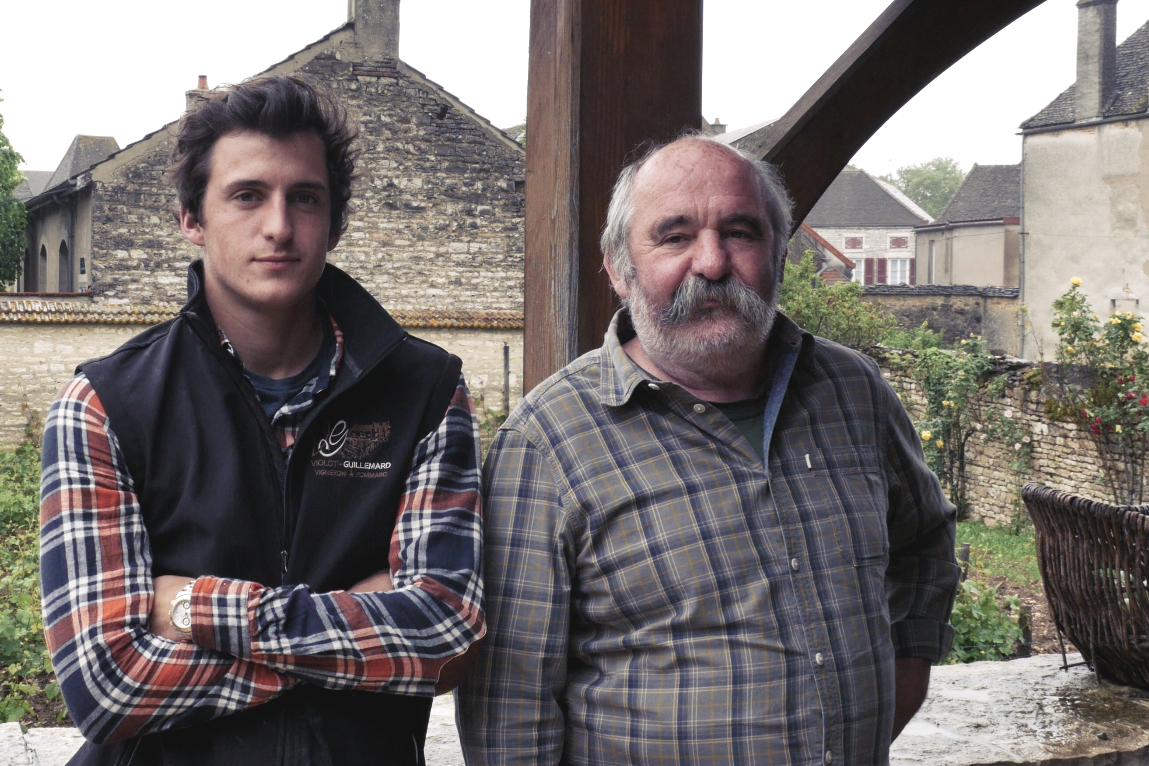
Thierry Violot-Guillemard manages his family’s estate with his son; he wonders if small producers can survive in the new normal of Burgundy’s changing weather. Credit: Copyright 2016 David Baker
Caroline Parent-Gros manages sales and marketing for the family estates. Her forefather, Étienne Parent, supplied wine to Thomas Jefferson; America is still their biggest export market. But now with less wine to sell, that legacy may be in jeopardy. When asked about this year’s slim harvest, she says, “I think that we can face another year … but maybe not one more.” Still, she remains optimistic. “You always expect to make the vintage. Even if you have some great and exceptional wine, you always expect something like the jackpot.” She believes her family’s best wines will still be made in the future.
More from Zester Daily:
» Elin's wine pick: a silky red from Burgundy
» Don't get hung up on terroir -- it's just a feel-good myth
Thierry Violot-Guillemard is a scrappy farmer who oozes Burgundian character, from his gnomish ruggedness to his broom of a mustache. He’s survived years of bad harvests and a crushing motorcycle accident that has required dozens of surgeries. But even that didn’t slow him down. He produces sought-after wines from his home and facility from the tiny town of Pommard. Though he expresses doubt that small producers will be able to survive another 40 years, he’s grooming his son Joannes to take the reigns of the family business. The legacy will continue.
Thiebault Hubert is a Volnay vigneron with a sunny disposition and a deep commitment to the terroir of his family’s vineyards. To preserve it, he’s turned to soft-touch biodynamic practices, eschewing chemicals and tilling the rows with horse and plow. He believes that to survive, small producers must adapt. “We know that we will actually, maybe never produce the quantities that we produced 15 years ago,” he told us. But he sees a silver lining, as the scarcity of fruit will drive a greater focus on quality.
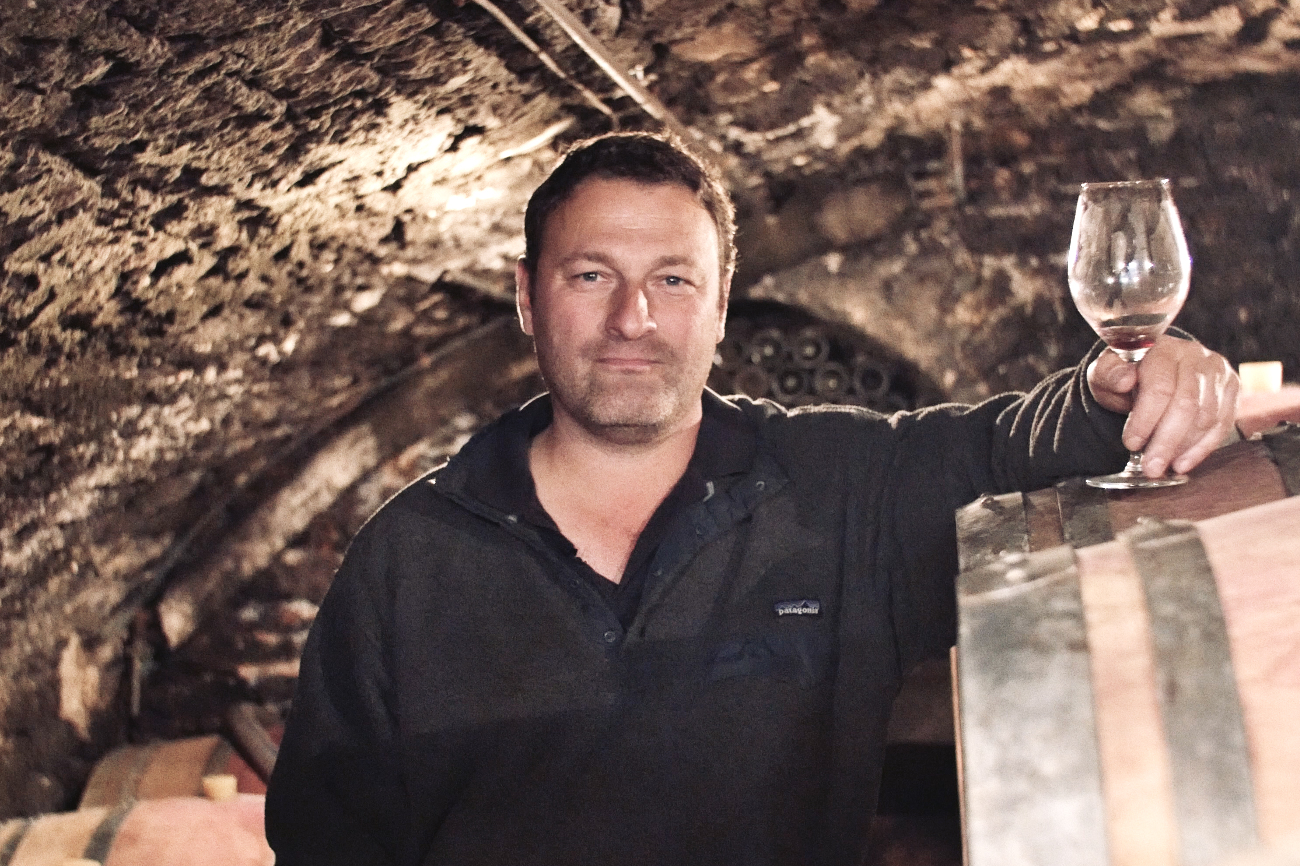
Thiebault Hubert believes smaller yields are here to stay, but he also feels this will drive even better quality. Credit: Copyright 2016 David Baker
Burgundy’s survival
Burgundy is not the same place I visited 20 years ago. And some day hail cannons may sound from the hillsides, disrupting a pleasant stroll through leafy vineyards. But Burgundians will survive. That’s something I learned from the Burgundian characters I wrote about in “Vintage.” And from the real people on whom they are based.
Fact and fiction may not always meet up. The Burgundy I wrote about is different from the one I see now. But somewhere in a vineyard, or in a dark, damp cellar, fact and fiction come together as they always must. Burgundy, and the spirit that drives it, is forever.
Main photo: Burgundian Caroline Parent-Gros, whose family has spent 14 generations in the wine business, believes the family’s best wines are ahead of her. Credit: Copyright 2016 David Baker

In the spirit of Oscar season, I asked friends in the wine, food and film businesses a novel question: If you could design the perfect meal around any film and match it with a wine, what would it look like?
Ordinarily I’m no fan of TV trays — nothing can so spoil supper like a flickering rectangle. A carefully crafted meal and your dinner companions deserve your full attention, not a screen on the wall, in the next room or in your pocket. But as a filmmaker and something of a cinema nerd, I’m not entirely opposed to the idea of fine dining in front of a feature film, as long as it’s done with some deliberation.
So, here are eight culinary cinema combinations — give them a try, or let them spark your own concepts for pairing dinner and wine with a movie.
‘Amélie’
Wine: Sparkling Vouvray
Food: Strawberry tart (tarte aux fraises) and a side of chocolate-covered espresso beans
I thought it best to kick off the exercise with this ridiculously sweet and effervescent French comedy featuring a charming, feisty heroine, an energetic camera style and vibrant colors, all of which require flavors to match.
‘Picnic at Hanging Rock’
Wine: Hill of Grace Shiraz
Food: Slow cooked confit of lamb shoulder with thinly sliced, oven baked, Mediterranean-style potatoes with garlic, rosemary and olive oil
Courtesy of director and winemaker Warwick Ross, this combination combines three Australian originals. Known for his “Red Obsession,” a film that picked up the AACTA prize (Aussie Oscar) for best documentary, Ross is also proprietor of Portsea Estate in Victoria, Australia.
‘Creature from the Black Lagoon’
Wine: Pinot Gris or Riesling
Food: Dubbed Creature from the Black Legume, this pairing calls for frog legs with spicy black bean sauce.
Matt Bennett, the creative chef-owner of Sybaris Bistro in Albany, Oregon, is known for both classic French dishes and imaginative flights of whimsy. He’s organized food/film pairings with the local, independent Pix Theater on the town’s main strip. Make your wine choice based on the level of heat in your black bean sauce.
‘Silence of the Lambs’
More from Zester Daily:
» For the ultimate roast chicken, go French
» Charcuterie for dessert? Try chocolate salami
Wine: Chianti, of course
Food: Veal liver and favas
It might be wrong to categorize a film whose protagonist is a cannibal as one of the greatest food films of all time, but this visceral combo plays on Chef Bennett’s sense of humor and the infamous line delivered by Anthony Hopkins (“A census taker once tried to test me. I ate his liver with some fava beans and a nice Chianti.”)
‘The Lady Vanishes’
Wine: A magnum of Champagne
Food: Roast chicken
Ian Johnson is the proprietor and wine director of Luc, a French bistro in Corvallis, Oregon. Johnson draws on his film school background with this nod to the Hitchcock classic. In the film, Margaret Lockwood has a roast chicken and a magnum of Champagne sent to her hotel room. Johnson’s notes on preparing the chicken: “Don’t bother trussing, rain kosher salt and pepper on it and roast for 50 to 60 minutes at 450°F.”
‘The Cave of Forgotten Dreams’
Wine: Mas de Libian, Khayyam, Cotes du Rhone
Food: Charcuterie! A board of rillette, pate, sliced salami, mustard and pickles with fresh baguette
Jessica Pierce of Brooks Winery in Oregon shows her sommelier chops with this deeply terroir-driven pairing, and recommends Werner Herzog’s haunting and lyrical documentary about ancient cave paintings in the Ardeche region of France. “The wine is a biodynamic producer in that region working with Rhone varietals and treating the wines in the most natural way possible, showing a true sense of the Ardeche terroir,” Pierce says. But lest we forget that food also represents the place just as much as wine: “Charcuterie is an important product from the Rhone, and curing meat is an age-old tradition.”
‘Babette’s Feast’
Wine: Comte Armand Close des Epeneaux
Food: Pigeon en sacrophage (truffled squab in a potato sarcophagus)
It’s no surprise that this classic food film shows up on a number of lists. Chef Matt Bennett recommends the pigeon, and Mike Officer of Carlisle Winery in Sonoma suggests the wine with the precision you’d expect of someone whose old vine Zinfandels have achieved cult status.

With its round, soft tannins and layers of fruit and licorice, this Burgundy from Domaine Ninot would be a great pairing with “Babette’s Feast” or Miles’s poetic paean to Pinot Noir in “Sideways.” Credit: Copyright 2016 David Baker
‘Big Night’
Wine: Montepulciano d’Abruzzo
Food: A simple omelet and the crust broken from the end of a fresh ciabatta
Let’s close with the greatest food film ever made: Stanley Tucci’s moving and hilarious tale follows Italian immigrant brothers Primo and Secondo as they wrangle with their New Jersey restaurant, the American Dream, and each other. It’s hard to select a dish from so many options, from the tri-colored risotto to the complicated timballo, but in the end it’s best to settle on a simple omelet as you wipe away a tear during the gorgeous closing scene.
Main photo: Critics call “Amélie” a “sugar-rush of a movie,” so an obvious pairing for this vibrant romantic comedy is strawberry tart, chocolate espresso beans and Champagne. Credit: Copyright 2016 David Baker

If you’re like me, you love wine but you might not have the benefit of deep pockets or space for a well-stocked cellar. And you’ve probably run into this scenario: It’s a Wednesday night and you’ve just slapped a filet on the grill or tossed some shrimp to sauté and you dash to your diminutive wine fridge to discover that you don’t have anything to pair with the meal.
Your options include settling for a mismatch, a mad dash to the supermarket to buy some mass-produced wine or maybe tapping into that fancy bottle of Barolo you smuggled back from Italy wrapped in your dirty socks and were planning to save for your anniversary. You could always skip the wine for the evening, though that really isn’t any kind of option at all.
If this has happened to you more than once, it’s a pretty good indication that you’re in need of a personal wine program. Restaurants put a lot of thought into making sure they always have the right wine at the right time. And while they manage their wine programs on a whole different level from a cash-strapped wine aficionado, the goals are the same: providing a great experience while keeping an eye on the bottom line.
So here are a few ways you can approach your personal wine supply like a savvy restaurateur.
Tap an expert

A good local wine shop will usually have some vineyard-driven, small-production choices at a range of prices. Credit: Copyright 2015 David Baker
Restaurants that are serious about wine hire a sommelier or a wine director to help them make their wine-buying decisions. Private consultants abound, but there’s also a lot free advice out there. Your local wine shop is a great place to start. Jerry Larson, owner of Wineopolis in Corvallis, Oregon, is my go-to expert for quick advice. He is happy to suggest budget buys that still balance quality.
“Go to Europe for the $10 bottles,” says Larson, who carries wines from around the world that express the places where they are grown, rather than those that are blended and crafted to a certain style or taste. While he proudly sports an entire wall of excellent Oregon wines, he’s eager to help you work with your budget goals. “The New World isn’t as good at $10 wines that are vineyard driven.”
Larson offers free tastings every Saturday to help customers tune their palates and test-drive some of the entry-level wines he stocks.
Match your menu

Thinking ahead about your menu will change the types of wines you typically buy. Credit: Copyright 2015 David Baker
“A wine director should be in constant communication with the chef,” says David Speer, sommelier and owner of Ambonnay, a Champagne bar in Portland. He also consults on establishing wine programs for restaurants and private collectors.
More from Zester Daily:
» Trader Joe's has wine covered at every price
» 7 Oregon nano-wineries making a big splash
That communication might seem easy to do at home when the wine director and head chef will probably be the same person. But it’s not as easy to accomplish when storage space is at a premium and wine purchases are made with a different part of the brain from the one that plans the menu.
I’ve tended to collect and save a lot of bigger, age-worthy reds, but when I stopped to look at what we cook and eat week to week, I noticed a disconnect. Our personal menu features lots of Northwest seafood, spicy Asian-influenced dishes and fresh salads and vegetables. Mineral-driven whites with bright acidity fit the bill much better than the epic red wines. Thinking about the menu objectively totally changed my wine-buying habits.
Keeping a close eye on your grocery cart will also allow you to adapt your wine program throughout the year. If you like to cook with local produce and shop at farmers markets, your menu will probably change over time. “Base your wine on what you eat, and think seasonally,” says Larson, whose shop abuts the Saturday market, allowing him a ringside seat to a parade of local produce.
Stay flexible

A good wine director will always keep an eye on the trends and bargains in case there’s ever a discounted wine. Credit: Copyright 2015 David Baker
“Remembering that your tastes will most likely change over time, don’t invest too heavily into one grape, region or producer. Spread it out,” says Speer, who suggests buying two to six bottles at a time to keep your supply nimble. “A case can be a bit much.”
The evolution of your tastes and palate is part of the adventure of wine. So saving a few slots for something new is a good idea.
Flexibility could also save you money. The wine market is constantly in flux. A good wine director will always keep an eye on the trends and bargains in case there’s ever a discounted wine that can be substituted for another option on the list.
Stock some exceptions

When space in your wine fridge is limited, you have to be thoughtful about how you balance your selections. Credit: Copyright 2015 David Baker
You don’t have to spend a lot of money to find great wines, but it’s still a good idea to have a few special bottles on hand. I live in Oregon’s Willamette Valley, and there are some amazing wines available, especially at higher prices. It would be a shame not to occasionally connect with the best the region has to offer.
Speer often sees restaurants making this very mistake.
Don’t forget the bubbles

Bubbles often go overlooked on both personal and restaurant wine lists. Credit: Copyright 2015 David Speer
Champagnes and sparkling wines aren’t only for weddings and celebrations. For Speer, whose passion for bubbles led him to open Ambonnay, it’s a no-brainer. “Your cellar should be 95 percent Champagne,” he says, only half-joking. “I think people don’t drink enough Champagne, and they forget that it’s really something you can enjoy more often, not just pop open with some friends and then move onto a ‘real’ wine.”
It’s a great time to begin exploring bubbles. There is an exciting movement away from big-production Champagnes to more single-vineyard, small-allotment vintages, and the range of options is growing. And there are sparkling wines from around the world that provide even more choices at great prices.
Speer recommends looking to Spain: “I’m most excited about Cava; there are some really cool, family-run places that are making great bubbles in the $15 to $20 range.”
Delicious, thoughtful wine and meal pairings are what make great restaurant experiences, but there’s no reason you can’t create the same synergy at home. You just need to think about the wines you buy a little more like a sommelier. So fire up the stove, pull a cork and create something special. And if you like what you taste, don’t forget to compliment the chef and tip a little extra for your somm.
Main photo: Sommelier David Speer recommends buying three to six bottles of a wine rather than a case; your tastes and menu will change over time and you want to remain flexible. Credit: Copyright 2015 David Baker

“Oysters are the canaries in the coal mine,” a fourth-generation oysterman once told me as we slogged across the mud flats of Willapa Bay in Washington. The grower was giving me a tour of his vast oyster beds that emerge as if by magic during every low tide. Oysters can filter up to 50 gallons of water per day, and the quality of the water they process affects their health … and their flavor. Healthy oysters mean a healthy environment, and when they struggle, they can indicate something dire for the habitat as a whole.
The oyster I swallowed had the precise taste of a clean, deep breath of Pacific Ocean air. It was what a gorgeous coastal landscape photo might taste like were it a flavor of ice cream. I understood why M.F.K. Fisher wrote that they were, “more like the smell of rock pools at low tide than any other food in the world,” and why that is a good thing. Then as I grew to understand that these creatures seemed specifically designed by nature, a benevolent creator or both for the task of pairing with splendid wines, I was hooked.
The only thing that remained was how to open the damn things. If you’re daunted by the process as I was, then this quick-start guide to oysters and wine will help you find, pair, unlock and swallow a magical taste of the marine environment, and then chase it with a sip of the best flavors that terrestrial geography has to offer.
Where to find oysters

Whoever sells you oysters is required to keep the tags documenting their origins on hand. Ask to see it and snap a photo to capture the details. Credit: Copyright 2015 David Baker
You can find them at your local supermarket seafood counter. You buy them live, but given the complexity of unlocking them from their secure and encrusted boxes, how do you tell if they’re fresh and have been handled with care?
By proxy.
“Look for a place that sells fresh fish,” says Jaret Foster, chef/owner of Oyster Social, a pop-up mobile raw bar in Portland, Oregon. Look for a counter that sells fish that look and smell fresh, with no fishy odor or bruised flesh. Whole fish should have clear eyes and bright red or pink gills. If the owners take pride in their fish, then the odds are good they’re selling quality oysters.
Restaurants and seafood purveyors buy oysters in mesh bags that are marked with the date of harvest and the location. Ask to see the tag and snap a phone picture for reference. Like great wines, oysters taste like where they come from, so explore the regional differences. The Pacific Northwest, the Atlantic and Gulf are three broad domestic regions to check out, and there are dozens of locales nestled within these.
Finally, shells of fresh oysters should be sealed tight. No gaps or openings. A good proprietor won’t sell you oysters with open shells. If they’re difficult to open, you’re on the right track. This, of course, presents another problem that we’ll tackle later.
Gather the gear

Everything you need to tackle oysters: a dish towel, mignonettes, an oyster knife and a bottle or three of your favorite wine. Credit: Copyright 2015 David Baker
If you’re serving oysters raw, you can do the work of opening them for your guests or share the fun. A good oyster knife is critical, but a screwdriver will work in a pinch (and the experience will drive you to find a good knife all the sooner). Crushed ice is important: From the moment you buy them at the market to when they’re waiting to be shucked and served, oysters should always be kept cool or on ice. Carry a small cooler bag to the market with you. Your vendor will provide the ice.
Mignonettes — fresh dressings — should be prepared in advanced and ready to roll. They can be as simple as lemon juice or your own creative dressing. A dish towel will help you hold the shell and protect your receiving hand from the dull knife blade. Work gloves on your receiving hand are an option to help you grip the shells, which can be both jagged and slippery.
Add a cutting board and a glass of wine and you’ll be geared up to swallow some sea.
A note on mignonettes

Jaret Foster, chef/owner of Portland’s Oyster Social, recommends eating the first oyster of the day unadorned, or with just a sip of wine to chase. Credit: Copyright 2015 David Baker
A good mignonette, a sauce or condiment for your oysters that is usually made fresh, can heighten the experience. I recommend avoiding jarred cocktail or hot sauces until you get a handle on the flavors of these slippery little critters as these sauces can overwhelm the freshness, but there’s no reason not to prepare some creative mignonettes. Recipes abound that feature rice wine vinegar, shallots, ginger, juniper, cucumbers, lime and more. A pair of options are included below.
Foster follows the rule of always eating the first oyster of the meal unadorned to experience its inherent flavor grounded in the region where it comes from.
And when it comes to oysters and wine, mignonettes are optional. In fact, a good wine sipped as a chaser can be considered a sort of mignonette in and of itself, and you may pick your wine style specifically for this task.
Find the right wine

Sommelier Jess Pierce of Brooks Wines and Jaret Foster of Oyster Social teach a seminar on pairing oysters and wine overlooking the Brooks vineyards in Amity, Oregon. Credit: Copyright 2015 David Baker
If you’re eating the oysters unadorned, then a bracing Alsatian-style Riesling is hard to beat. The eye-watering brightness and acidity can act as a dressing. At a recent oyster workshop led by Oyster Social’s Foster, Jess Pierce of Brooks Winery presented the guests with a selection wines ranging from magnificent dry Rieslings to Pinot Gris and dry Muscadet.
“Oysters show their terroir well, so why not pair them with wines that do the same?” Pierce said as she poured wines framed by views of the vineyards where they were grown. More and more domestic producers are making Rieslings and Gewürztraminers in the dry, acidic Alsatian style, though they’re far from the only wine options.
Champagne and sparkling wines provide a lively way to begin any meal, and their acidity and effervescence complement the fresh earthy, tidal flavor of oysters. A transparent Chardonnay that really shows its minerality, like Chablis, is another great match. Laura Anderson, who runs Local Ocean Seafoods, known for its hyper-fresh menu and location directly across from the fishing fleet in Newport, Oregon, likes to pair half-oak, half-steel Chardonnays from Oregon’s Ribbon Ridge AVA: “I look for a crispness and minerality to balance with the wildness of the oysters,”she says.
The old saw is to drink white wines with shellfish, but there’s no need to limit yourself. Reds can work just fine. A light, slightly under-ripe Pinot Noir from a cool year in Oregon, New Zealand or Burgundy won’t break the bank and a bright, tart swallow is the perfect way to chase a glistening mollusk down your gullet.
Other reds to try include a cru Beaujolais or Gamay. Look for wines from places by the ocean, like Sicily,” Pierce says. Locals there drink their local reds and whites alike with menus largely driven by the sea.
Finally, it’s always good to look to the classics. M.F.K. Fisher claims that an Alsatian Pinot Blanc is the perfect wine match in her gorgeous treatise on bivalves, “Consider the Oyster.”
The art of the shuck
So you’ve got the gear, found your oysters and bought the wine: Now how do you unlock the things without slicing off a thumb or crushing the shell and spilling the flavor-infused liquor?
1. Wrap your passive hand in the dish towel. A glove will improve your grip. Oysters have a top and a bottom, so you want to hold the cup-side facing down.
2. Locate the hinge at the back of the shell if you can’t find a seam along the side. Insert your oyster knife into the hinge and twist like a key. It’ll take a try or three, but you should be able to create a gap and slowly work the two halves of the shell open by twisting the knife and working around the edges.
3. After pulling the top off, slide your knife along the roof of the top shell to cut the oyster’s adductor muscle.
4. Try not to spill the “liquor,” the silky juices inside the shell that pack much of the flavor. You’ll want to swallow that with the oyster.
5. Don’t worry about chips, cracks and bits of shell … you’ll make a mess, especially at first. Practice and plan to spend time tidying up. Study the process by hitting YouTube or state wildlife and extension offices in places where oysters are grown. They all offer plenty of advice to help get you started.
That’s pretty much everything you need to get started with oysters and wine. They’re both amazing natural products that have an unmatched ability to express flavors from where they are grown. Eating a clean, flavorful oyster is a small sort of tribute to ocean health. It is my hope that these tips lead you more quickly to your own oyster epiphany so that you aren’t required to pull on waders and slog after a spry oysterman through the drizzle … mud sucking at your boots until your hips and back ache, the stiff bay breeze whipping you … before you can appreciate the full glory of these tasty little bivalves and begin to care about where they come from.
More from Zester Daily:
» Ladies first, and other advice for eating oysters
» Oyster stout beer is exactly that -- and dreamy
Classic Mignonette Sauce
–Enrique Sanchez, chef, Local Ocean Seafoods
Yield: One cup of sauce, enough for 5 to 6 dozen oysters
Ingredients
1 tablespoon course ground black pepper
1/2 cup rice wine vinegar
2 tablespoons minced shallots
1/2 cup sparkling wine
Salt to taste
Directions
Simmer wine in a saucepan to cook out alcohol; take off heat and stir in rest of ingredients; taste, salt, chill, serve.
Yuzukoshō Vinaigrette
— Jaret Foster, chef/owner, Oyster Social
Yield: One cup of sauce, enough for 5 to 6 dozen oysters
Ingredients
1/2 cup rice wine vinegar
1/4 cup fresh lemon juice
1/4 cup extra virgin olive oil
1 to 2 tablespoons yuzukoshō (Japanese fermented chili-citrus paste, available at Asian grocers)
2 tablespoons finely diced daikon radish
Directions
Combine all ingredients in a quart jar and just before serving shake well to emulsify; keeps well in the refrigerator for two weeks to a month.
Main photo: Oysters on ice with lemon. Credit: Copyright Serhiy Zavalnyuk/Thinkstock

I’ve always felt that the best wine experiences can be divided into two categories: immersion and transportation.
The former is a sip of Pinot in a dank Burgundian cellar, the barrel sample pulled by a vigneron in must-spattered boots. The latter is any great Burgundy on your table that carries you back to that moment.
Food can do the same: biting into Dungeness crab within the sound of crashing surf on the Oregon Coast, or a perfectly crafted risotto that takes you back to an Italian piazza. These flavors are grounded in geography. They immerse you more deeply into where you are, or they transport you in an instant to a place where you’ve been or someday hope to go.
So for this reason, I’ve always cast a wary eye on cocktails. It might be due to the fact that I came of age in the dark days of Jell-O shots and butterscotch schnapps, long before the current cocktail renaissance. But I’ve also found it difficult to reconcile this notion of immersion and transportation with mixed drinks. Is there a sense of geography in a cocktail when it can be made almost anywhere by a skilled hand and the right ingredients?
I recently set out to explore this question, and was surprised by what I found.

To experiment with making cocktails, mixologist Art Tierce suggests sticking to known recipes then tweaking one ingredient at a time until you get what you want. Credit: Copyright 2015 David Baker
Creative Mixology
Art Tierce might be the perfect person to ask about cocktails and terroir, that flexible French notion that loosely translates as sense of place. He’s an assistant winemaker at Ransom Wines & Spirits and grew up in wine country in Santa Rosa, California, where the vineyards started just beyond center field of his little league ballpark. But he strayed into the world of bartending with stints in Las Vegas and Portland before joining Ransom in Sheridan, Oregon, to make wine.
When Tierce isn’t manning the pumps or working harvest, he serves as resident mixologist, finding creative ways to showcase Ransom’s artisanal spirits in mixed drinks. When I arrived at the distillery, Tierce was waiting with an upended whiskey barrel arrayed with the gear needed to mix three cocktails evocative of the Northwest in late winter — all of them featuring Ransom’s sweet vermouth, produced with the region’s grapes.
“The trends tend to be darker, heavier, richer flavors in the winter,” said Tierce as he mixed a cocktail he calls “Empty Chamber,” a full-flavored, low-alcohol drink with sherry, vermouth and egg white. “The flavors represent cold winter months, but you’re not going to get this waft of alcohol.”
And indeed, the complexity of the flavors combined with the richness of the mouthfeel and texture evoked the roiling maritime clouds that slip over the Coast Range and hang over the valley for much of the season.
Next up was “New World Voyages,” a rum-based drink that places the spirits up front. “I’ve always found that in the winter, and especially living in Oregon with the dark, cloudy, overcast skies, that I love rum,” Tierce said, shaking a drink that may call winter skies to mind, but also offers a hint of brightness. “I think most people think of rum as their summer beverage.”
His last suggestion, “The Emerald, by Ransom,” is a twist on a classic Manhattan that uses their Irish whiskey, The Emerald 1865. It is a recreation of a recipe from the late 19th century discovered buried in archives. “It historically represents how dense and aromatic the Irish whiskies of the heyday were,” Tierce said of their flagship spirit, stirring a drink that served as a foundation, showcasing the whiskey’s malty notes, and creating something strong enough to stand up to the season.
With the three drinks lined up on a barrel in an Oregon Coast Range distillery, the ornate onion dome of the Ransom still looming overhead like something out of a Jules Verne novel, I certainly started to feel that sense of place as we tasted through Tierce’s creations.

Cocktails are ephemeral — they begin to change as soon as ice begins to melt and the zest of orange dissipates. Credit: Copyright 2015 David Baker
The Human Factor
I carried this question of cocktail terroir to my local mixologist. Michael Monroe tends bar at a cozy college town speakeasy in Corvallis, Oregon. Not even visible from the street, you need to slip through the front door of a restaurant called Magenta and descend a flight of stairs to find SnugBar, where Monroe focuses on cultivating the next generation of cocktail connoisseurs.
At my elbow in the tight quarters, a college-age drinker ordered a whiskey sour. Monroe checked his ID and grew excited. “Hey man, have you always ordered good cocktails?” he asked.
The kid shrugged. After Monroe mixed the drink, he leaned over to me: “That kid turned 21 a few months ago and he just ordered a nine-dollar whiskey sour.” It’s not the price tag that earned Monroe’s enthusiasm. “If I wasn’t striving to make a really good whiskey sour that’s worth the money, they wouldn’t be doing that.”
For Monroe, his aim is to cultivate long-term customers. He’d much rather see them savor a pair of well-crafted drinks and keep coming back for years rather than load up and burn out early on the bar scene. Quality, sustainability and moderation go together.
When I shared my concept of transportation and immersion, Monroe mixed me a Kingston Club from their drink menu, one based on a recipe from Portland bartender and writer Jeffrey Morganthaler. Centered on Drambuie, with the spirit’s malt whiskey, spice and honey conjuring its Scottish roots (hailing from a region that also knows a thing or two about clouds), the drink offsets this heaviness with a hint of tropical fruit to let in a little sunshine. It’s a balancing act. More immersion and transportation at work.
Moveable Terroir
I found that good cocktails do conjure a sense of place. The process is different from food, where it can take months to cultivate a kitchen garden to produce hyper-local produce, or wine, which requires an entire season to capture a year’s worth of weather to store in a barrel and then bottle.
With cocktails, you can even take a DIY approach. “Home mixology is at an all-time high. It’s amazing and it’s fun to be creative,” Tierce said. For those wanting to experiment, he suggests sticking to known recipes and then tweaking one ingredient at a time until you get a feel for what you want to accomplish. He also recommends Morganthaler’s “The Bar Book” as a starting point.
Tierce’s key advice? Use the best ingredients: “You can never fake fresh, ever.”
Emily Mistell, who mixes drinks at Portland, Oregon’s popular Rum Club, underscores the importance of freshness. “We change our menu at the club with the seasons, trying to utilize as many fresh local ingredients as we can,” she said.
As for Mistell’s recommendation for a drink that can send you somewhere else? “My all-time favorite cocktail year round might have to be a drink from Martinique (French Virgin Islands) called the Ti’ Punch.”
More from Zester Daily:
» Cocktail Hour: Best Books For Would-Be Mixologists
» Best Cocktail Apps For Aspiring Bartenders
» Don't Get Hung Up On Terroir – It's Just A Feel-Good Myth
» Aged Cocktails, A New Trend You Can Try At Home
It’s been said that the three key ingredients of terroir are weather, soil and people. With cocktails, the human factor is critical — a person creates a great drink right before your eyes. Cocktails are ephemeral, effervescent. They begin to change as soon as the ice begins to melt and the zest of orange dissipates. But your bartender remains, ready to mix the next drink. It’s all about good ingredients combined with performance art. The terroir isn’t a gravelly hillside or the black loam of Granny’s river bottom garden — it’s the flesh, bone and creativity of your resident mixologist.
Empty Chamber
Yield: one drink
Ingredients
1.5 ounces Ransom Sweet Vermouth
3/4 ounce oloroso sherry
1/2 ounce Ransom Old Tom Gin
1/2 ounce fresh squeezed lemon juice
1/4 ounce rich demerara syrup
White of one egg
Fee Brothers Whiskey Barrel-Aged Bitters
Directions
Dry shake, then add ice. Shake, strain and garnish with Fee Brothers Whiskey Barrel-Aged Bitters dripped on top with a design.
New World Voyages
Yield: one drink
Ingredients
1 ounce Ransom Old Tom Gin
1 ounce Ransom Sweet Vermouth
1 ounce Pampero Aniversario Rum
2 dashes orange bitters
Zest and peel of 1 orange and 1 lemon
Directions
Stir over ice, strain into an old-fashioned glass with a big cube of ice. Add zest and peel of an orange and a lemon.
The Emerald, by Ransom
Yield: one drink
Ingredients
2 1/4 ounces Ransom 1865
3/4 ounce Ransom Sweet Vermouth
2 dashes Angostura bitters
1 dash orange bitters
Zest and peel of 1 orange
Directions
Stir, strain into a coupe, add zest and peel of an orange.
The Kingston Club
Yield: one drink
Ingredients
1 1/2ounces Drambuie
1 1/2 ounces pineapple juice
3/4 ounce lime juice
1 teaspoon Fernet Branca
3 dashes Angostura bitters
1 ounce soda water
Directions
Shake ingredients with ice and finish with 1 ounce soda water. Strain mix over fresh ice into a chilled Collins glass and garnish with an orange twist.
Ti’ Punch
Yield: one drink
Ingredients
2 ounces Rhum agricole (my favorite is Clement Canne Bleue or Neisson)
Fresh sugar cane syrup
Fresh limes
Directions
Experiment with your own lime and sugar ratios: everyone likes something different. Using ice is optional, but Mistell suggests one large cube.
Recipes: Empty Chamber, New World Voyages and The Emerald, by Ransom courtesy Art Tierce, Ransom Wines & Spirits; Kingston Club courtesy Jeffrey Morganthaler; Ti’Punch courtesy Emily Mistell of the Rum Club
Main photo: Art Tierce, assistant winemaker at Ransom Wine & Spirits, is also a mixologist who specializes in cocktails with rich, evocative flavors. Credit: Copyright 2015 David Baker

Dan Pashman didn’t set out to make his living writing and talking about food. But with a popular podcast, a web video series and a new book from Simon & Schuster, his life has become all about eating. His podcast, “The Sporkful,” earned him a James Beard Award nomination and launched a career in food media; when he started it, though, Pashman’s goals were pragmatic.
The 37-year-old from Greenlawn, New York, worked as a radio producer on a number of programs that were canceled, including a stint on the ill-fated Air America radio network’s morning show. A podcast would give him more control. “I figured if I was going to put all this work into it, the only one who could cancel it was me,” he said.
“Eat More Better: How to Make Every Bite More Delicious”
By Dan Pashman, Simon & Schuster, 2014, 352 pages
» Click here to buy the book
It was only after deciding to start the podcast that he began to cast around for a topic. With no culinary background, the food angle of his new show may have been an afterthought. But he’s always been a passionate eater (which, he assures me, is distinct from your typical foodie).
“The Sporkful” is an eclectic mix of conversation about food from outside the food industry. His guests include musicians and comedians, and he can only recall interviewing three chefs in his five years of recording: “It feels like 99% of the food media talk about 1% of the things you could talk about when it comes to food and eating. I feel there is so much more out there that doesn’t get covered.”
More from Zester Daily:
» From wicked to gourmet: 'Grilled cheese' inspires
» Surprise! Kids are key to stress-free family dinners
Pashman has always approached eating with an odd sense of certainty about how it should be done. A self-described “strict constructionist” when it comes to making sandwiches, he’s created elaborate rules for how to improve the taste of everything, from the right way to hold a tortilla chip for a given dip to plating a grilled cheese sandwich to preserve its crispness.
His overriding philosophy is to extract a higher level of “deliciousness” out of every meal, whether that means putting the cheese on the bottom of a cheeseburger to be closer to the tongue or turning boxes of leftover Girl Scout cookies into the perfect cheesecake crust. This philosophy has served him well: carrying him into the WNYC-featured podcast, a web series for The Cooking Channel, “You’re Eating It Wrong,” and now his new book.
Framed as a tongue-in-cheek textbook, “Eat More Better: How to Make Every Bite More Delicious” is devoted to the art of extracting deliciousness. It’s a wickedly clever un-cookbook, but it’s also filled with thoughtful and vetted (he with a fact checker and recipe tester) tips, tricks and recipes from his favorite restaurants and even a few celebrities. Rachel Maddow, for example, contributes recommendations for the perfect margarita.
I recently chatted with Pashman about “The Sporkful” and how “Eat More Better” evolved from a snarky satire into a sincere (but hilariously irreverent) treatise on the art of eating.

Though humorous, Dan Pashman’s new book, “Eat More Better” includes helpful tips and recipes. Credit: Simon & Schuster
The book is filled with humor, but also sound advice, useful ideas and fantastic recipes. How did you arrive at a balance between practical, serious information and maintaining that light tone?
That was probably the biggest creative challenge. It was important for me that the book be useful: that it would have information that was, first of all, just accurate, and people would say, “that’s a great idea, I’m going to start doing that.” But I wanted it to be so much more than, “here are a bunch of tips and hacks for you in your kitchen.” I wanted it be a book that people would just pick up and read because it’s funny. I wanted it to be a book that you might read and it would change how you eat, but also it could be a book you just put next to your toilet, frankly, and get a kick out of every once in a while.
Food culture has evolved — people are getting more serious about what they eat. There are televised cooking competitions and maybe even a culture of elitism. Is your book a response to that?
Food is a wonderful common ground. There’s not a single culture or ethnic group that you can learn anything about without pretty quickly hearing about their food.
Whatever your background is, or wherever you’re from, if you think of any holiday or family gathering that you grew up celebrating every year, what’s one of the first things you’re going to think about? You’re going to think about the food you ate. It’s such an integral part of memories, of childhood, of life experiences. And it’s so fun! It’s so much about pleasure.
And so much of the food stuff out there is so serious. I’m not against it, and I consume a lot of that media. But I also feel like there’s this opportunity to cover this whole other world of having fun and focusing on the pleasure and the joy of food and eating.
What’s one thing you’d want readers to take away from your book?
That you can always make your life more delicious. You don’t need a lot of money, you don’t need special expertise, you just need to put forth a little more effort and think a little harder about what you’re doing when you eat.
If you can make every eating experience a little bit more delicious … it doesn’t need to be perfect and you shouldn’t come away from this feeling all this pressure to do it right, but if you could just make it ten percent better, just by putting in a little more effort. Imagine that … three meals a day … if every meal was 10% better, three meals a day times weeks times months times years of your life, it’s like your whole existence just got better. I do hope that in its own quirky way that this book will make people’s lives better.
You have homework assignments at the end of the chapters. Do you ever hear from your readers?
Yeah, I’ve gotten some in. I actually have one in my queue to add to “The Sporkful” blog that was really great. That’s been fun. You can continue to send in your homework submissions. I read every single one if you email me at dan@sporkful.com.
You have two small children — has your perspective on eating evolved as a result?
I don’t know how much my perspective has actually evolved, because my perspective was a little bit childlike already. A lot of what I do is about questioning assumptions: “Well, why can’t you do it that way?” And that’s the kind of thing that little kids do all the time.
I didn’t set out to make “The Sporkful” or this book especially geared toward kids. But it turned out that after I launched the podcast I started getting all these emails from parents, especially parents of kids who were 8 to 14, saying, “‘The Sporkful’ is the only thing we can agree on to listen to in the car, and we love listening to it as a family and discussing and debating what you’re talking about.” That was really exciting and not something I expected or planned for.
Pashman admits to having an idea for a second book. But with a surge in podcast listeners after the publication of “Eat More Better,” an increase in frequency of the show, new television opportunities and plans for live appearances at events such as Taste of Chicago and South by Southwest, he’s got his hands full. And when things get too hectic? He just follows his own advice: “No matter how crummy your day is looking when you wake up in the morning, if you have a couple good meals to look forward to, you’re doing pretty well.”
Spoken like a true eater.
Main photo: Dan Pashman hopes his new book, “Eat More Better” will help everyone make and eat food they truly enjoy. Credit: Lilia Cretcher for “The Sporkful”